
|
Published on:
October 9, 2026
|
Published on:
October 9, 2026
Ultimate Guide to Restaurant Commerce Platforms
Learn how restaurant commerce platforms power ordering, loyalty, delivery, marketing, and fulfillment while giving growing restaurant brands greater control.
A restaurant can have great technology and still deliver a frustrating experience.
One system says an item is available while another says it is sold out. A guest earns loyalty points in the app but cannot use them at the kiosk. Delivery orders arrive on separate tablets, forcing staff to re-enter them while the kitchen is already under pressure. Every disconnect adds friction for employees, creates confusion for guests, and makes the operation harder to control.
The problem is not that restaurants lack technology. It is that too many of those tools were added one at a time, for one channel or one problem, without a shared system underneath them. As ordering channels multiply and guest expectations rise, those gaps become more expensive—showing up in lost time, lost margin, and lost loyalty.
Today, guests are easier to lose than ever. In 2026, 45% of diners say their favorite restaurant chain changed in the past year, up from 33% in 2025, according to Tillster's 2026 Phygital Index Report.
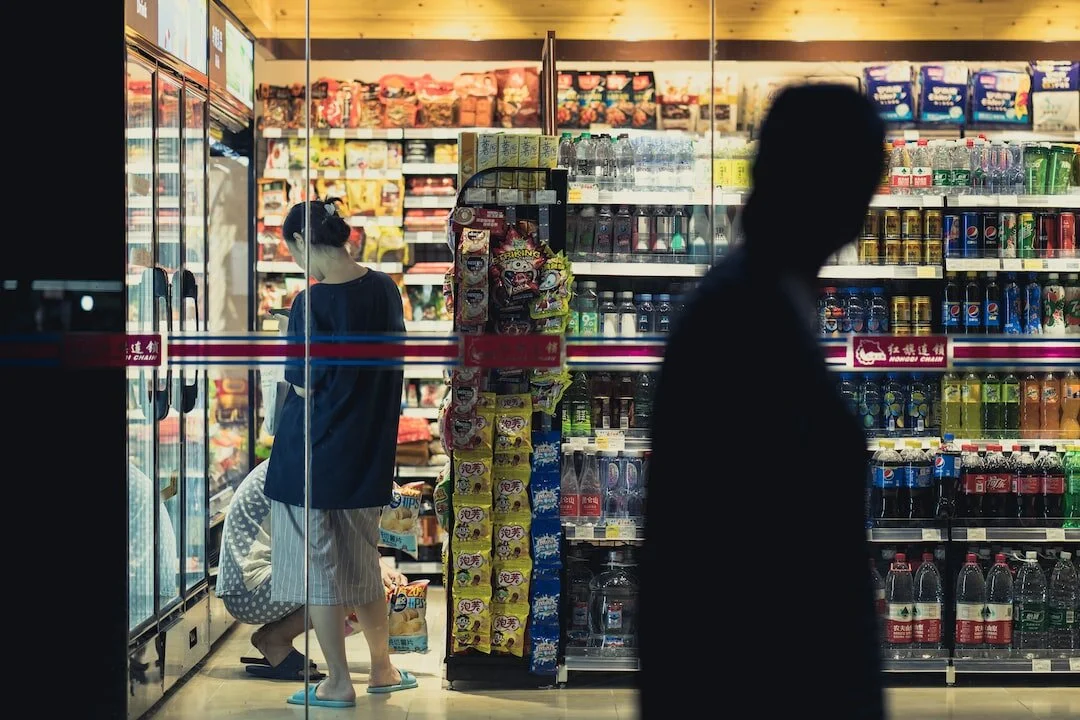
On top of that, convenience stores are also now jostling for QSR customer share. With hot food programs, branded menu concepts, mobile apps, and delivery on platforms like Uber Eats and DoorDash, convenience stores are now serious contenders for everyday meal occasions. In 2026, 33% of diners report visiting convenience stores more frequently for meals compared to last year.
A restaurant commerce platform closes the gaps in guest experience, convenience, speed, control, and execution.
It's one connected system that keeps menus, pricing, inventory, loyalty, and orders in sync across every channel a guest uses, so the brand works the same way everywhere.
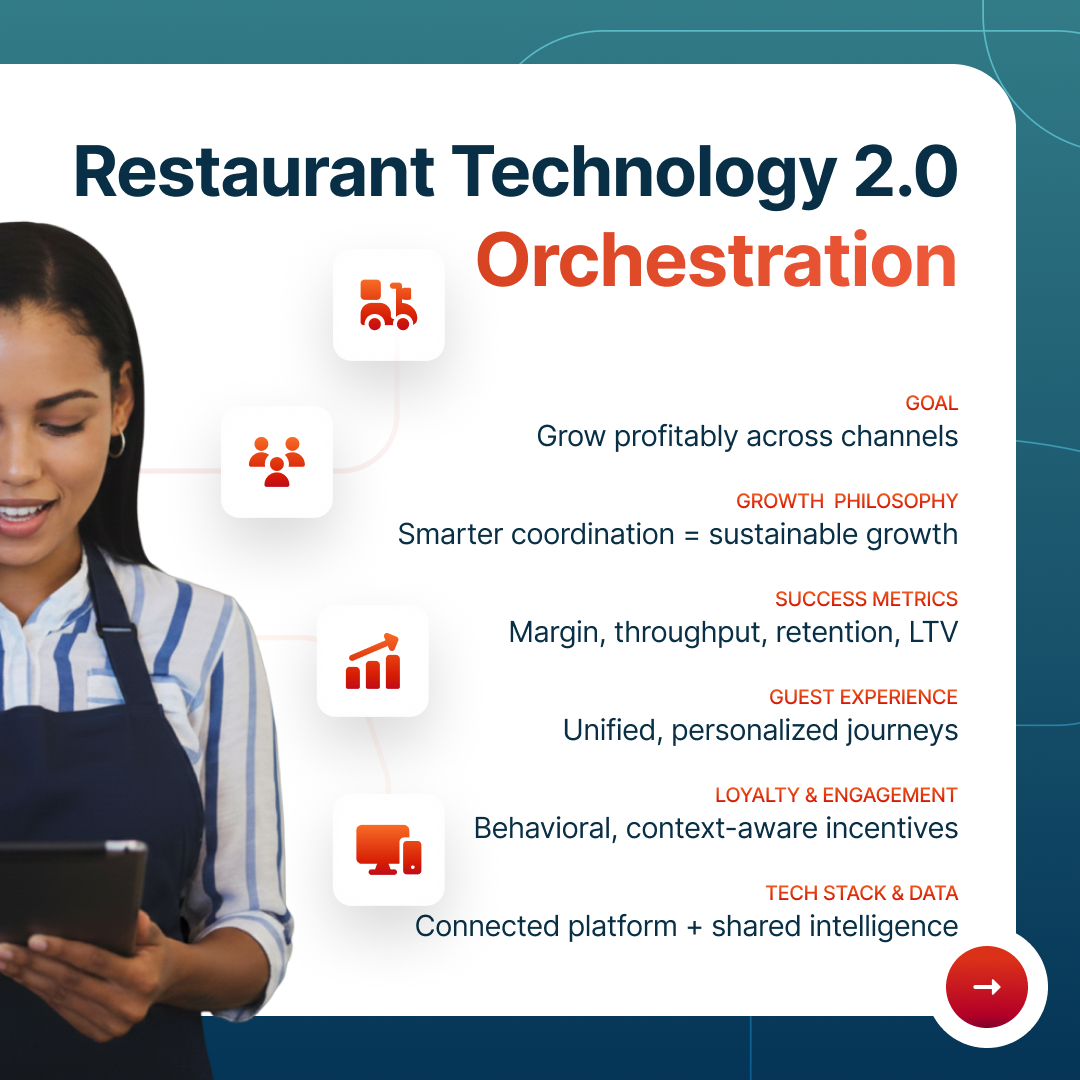
That shift, from a pile of disconnected tools to one coordinated system, is what the industry calls Restaurant Tech 2.0.
What is a restaurant commerce platform?
A restaurant commerce platform gives brands control over how ordering and fulfillment work across every channel and location. It connects menus, pricing, orders, loyalty, payments, and fulfillment so teams are not managing each touchpoint as a separate system.
The value goes beyond keeping everything in sync. With the right platform corporate teams have a central place to set standards while still allowing the flexibility restaurant operators need at the market and store level. A brand can roll out a promotion globally, adjust pricing by region, localize menus by market, or let an individual store mark an item unavailable without breaking the broader system.
That combination of connection and control is what makes the platform useful at scale: one foundation for the brand, with enough local flexibility to reflect how each restaurant actually operates.
What does a restaurant commerce platform do?
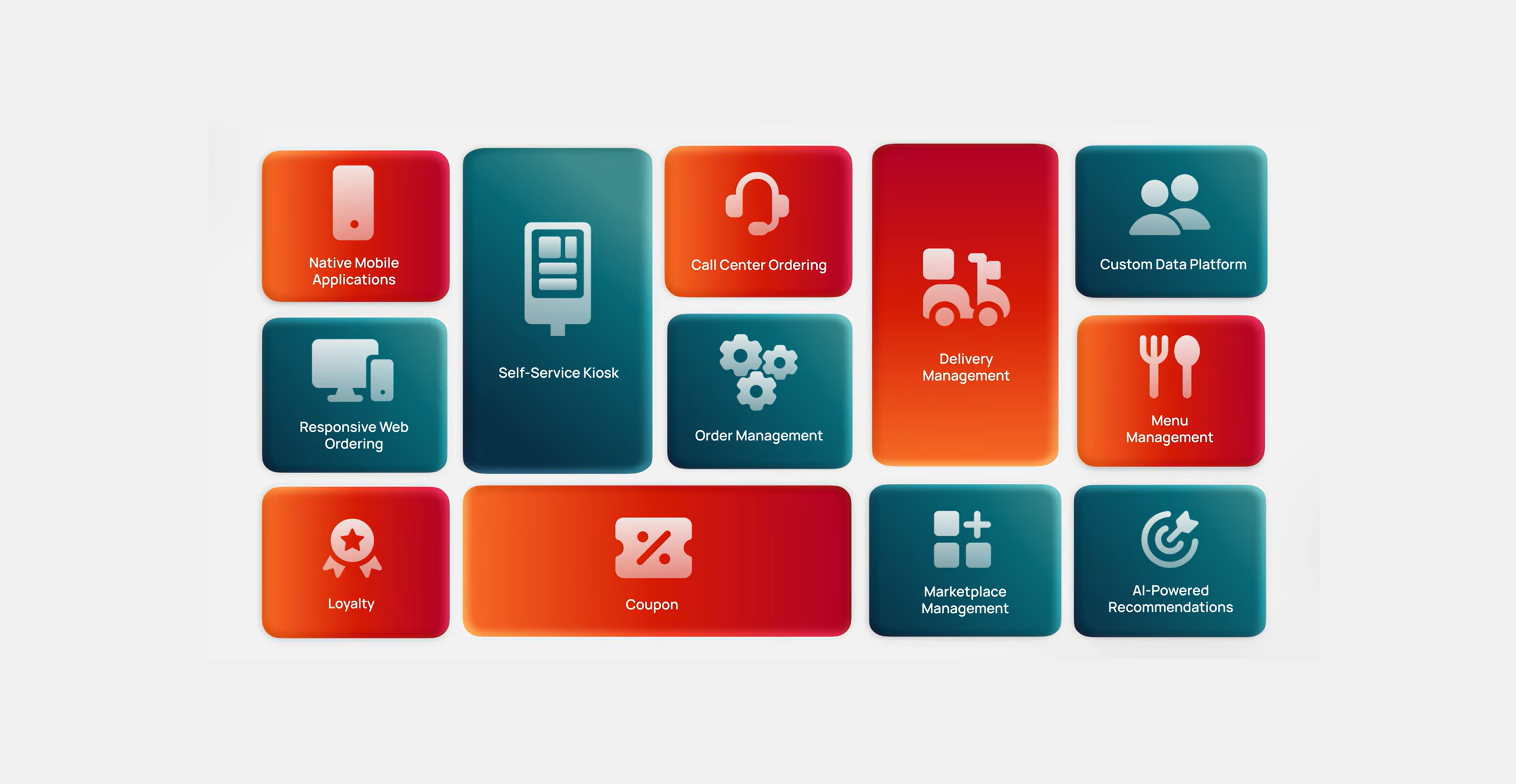
The value of a restaurant commerce platform shows up in the day-to-day work it takes off restaurant teams and the control it gives back to the brand. From menu management and order routing to delivery, loyalty, integrations, and international expansion, the platform coordinates the moving parts that otherwise become harder to manage as a restaurant grows.
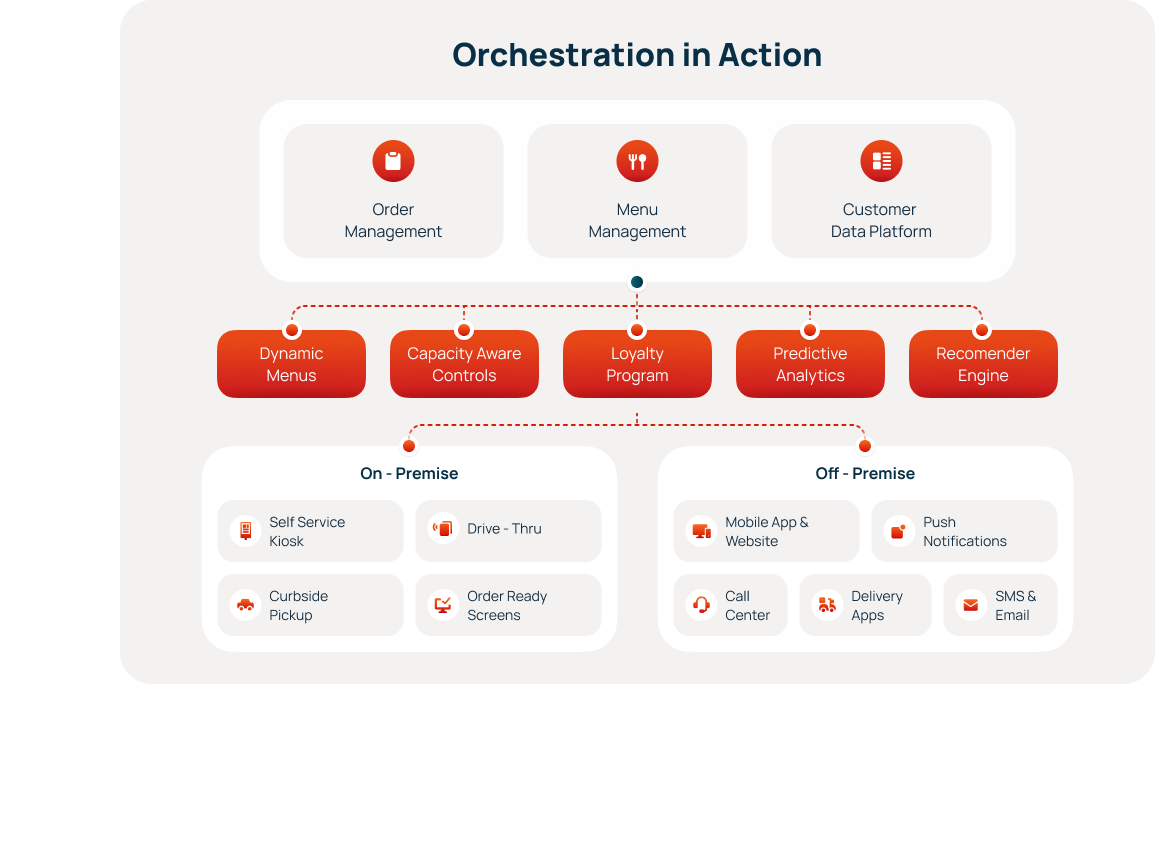
Here are the core functions a restaurant commerce platform should handle.
#1 Managing restaurant menus across channels and locations
Your POS holds hundreds of item codes that mean nothing to a guest. What a guest sees is different: real descriptions, photos, allergen info, modifier choices. A restaurant commerce platform keeps both connected but separate, so you can rewrite a menu description without touching the POS database underneath.
For multi-unit brands, the platform also cleans up the mess that builds over years of store openings. One store's POS calls it "medium fries," another calls it "med fries," and a third has it under a code nobody remembers creating. The platform maps all of those to one item, so reporting and promotions work across stores.
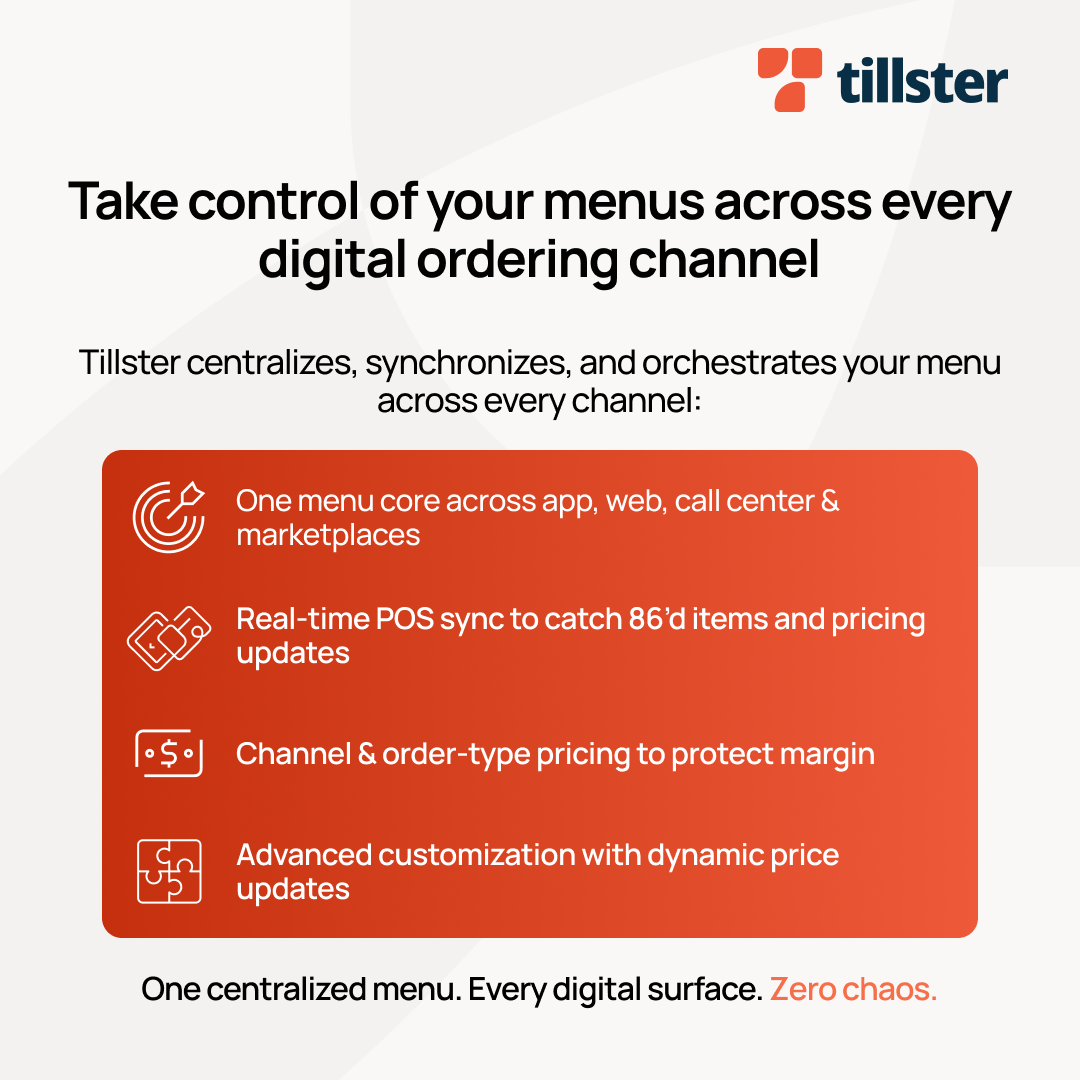
From there, it pushes that menu out in whatever format each channel needs: your app, your kiosks, and each delivery marketplace, all of which want the data differently. A price change goes out once and lands everywhere, and you can trace it end to end to confirm it arrived.
That centralized control also extends to how menus behave in each channel. You can add a markup on marketplace listings to offset commission without rebuilding those menus store by store. Menus can flip from breakfast to lunch on a schedule. Modifier rules like maximum toppings or a required protein choice stop invalid or incomplete orders before they reach the kitchen.
#2 Managing multichannel restaurant orders and protecting execution
For busy restaurants with multiple ordering channels, an order management system changes the game.
App orders, web orders, kiosk orders, phone orders, and delivery marketplace orders all arrive in a single stream that goes straight into the register, with no one re-typing anything. The bar to ask any vendor about here is injection reliability, because a failed injection is a lost order.
Stock updates move the same way. A manager marks an item 86'd at the POS, and it disappears from the app, the website, the kiosks, and every delivery marketplace.
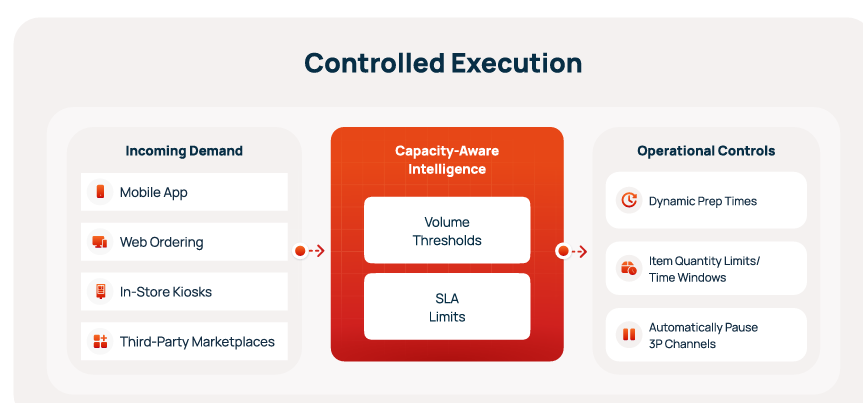
The system also watches kitchen load instead of accepting orders blindly. When things back up, it extends promise times, sends updated prep estimates to the delivery apps, and can pause incoming marketplace orders until the kitchen catches up. Thresholds are usually configurable, so a store can pause third-party channels automatically once it takes more than a set number of orders inside a set window.
#3 Managing deliveries from different courier types
Delivery gets complicated quickly because restaurants may use their own drivers, third-party courier networks, delivery marketplaces, or a mix of all three. A restaurant commerce platform brings those different fulfillment models into one system, so operators can decide how orders should be delivered without managing each option separately.
No matter who completes the delivery, restaurant teams should be able to see orders, driver status, ETAs, and fulfillment progress in one operational view. That keeps delivery connected to the same kitchen and order-management workflows as the rest of the business.
The platform should also give operators control over delivery zones, fees, minimum order values, promise times, and eligibility by location. That makes it possible to adapt delivery rules to the economics and operating realities of each restaurant rather than applying the same setup everywhere.
Using your own drivers
For brands with an in-house fleet, the platform should help stores assign orders, route drivers, track deliveries, and monitor performance from one place. Drivers can receive turn-by-turn directions and update order status as they move from the restaurant to the guest.
Using third-party drivers for direct orders
A guest may order from your website or app even when you do not have your own driver available. In that case, the platform can send the delivery to a third-party courier network while the restaurant still owns the customer transaction and ordering experience.
Combining both when demand changes
Restaurants do not have to choose one delivery model permanently. A hybrid setup can use in-house drivers for normal demand and automatically send overflow orders to third-party couriers when volume spikes or internal drivers are unavailable.
#4 Running restaurant loyalty programs
A restaurant commerce platform should make loyalty work wherever the guest chooses to order. Whether someone buys through the app, website, kiosk, call center, or at the counter, they should be able to earn points, redeem rewards, and see the same loyalty balance without being pushed into a separate experience.
The platform should also give brands flexibility in how the program is structured. That can include points based on spend or visits, digital punch-card programs, tiered membership levels, and rewards for actions such as signing up, referring a friend, or celebrating a birthday. Brands can adjust earning rules by customer tier, product, location, or other criteria to make the program fit their strategy rather than forcing every restaurant into the same model.
Redemption should be just as flexible. Guests should be able to apply rewards during checkout, use points toward purchases, and customize rewarded items with paid additions. Done well, redemption can drive incremental revenue instead of simply giving away margin: 62% of loyalty members add full-priced items they had not originally planned to order when redeeming a free reward, while 47% pay extra to upgrade or customize the free item.
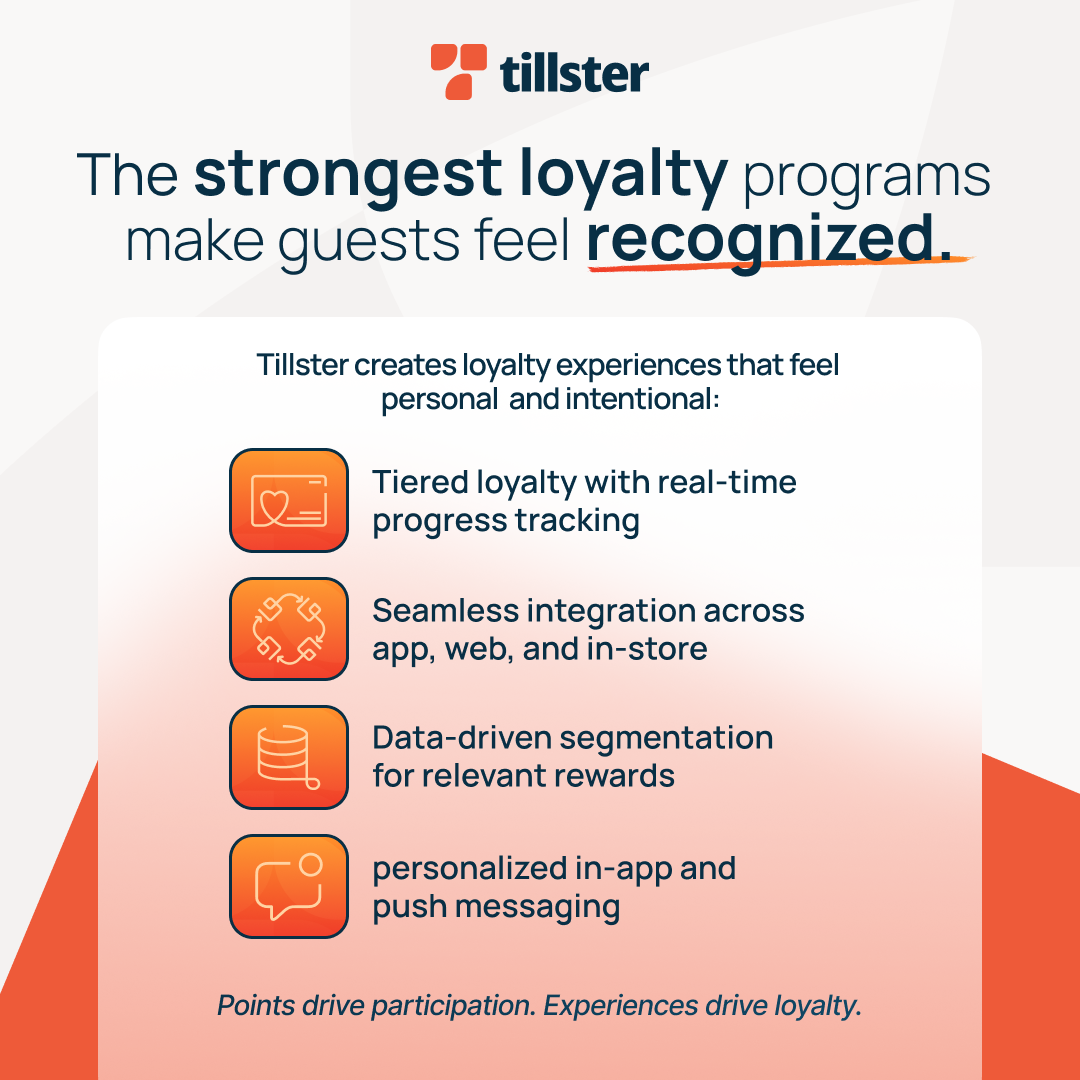
The most important part is that loyalty stays connected to the rest of the commerce platform. Order history, loyalty activity, and guest behavior can feed into a shared customer profile, giving brands a better understanding of their most valuable customers and creating a stronger foundation for personalization and retention.
#5 Powering promotions and owned-channel marketing
A restaurant commerce platform should help brands use their owned channels to influence guest behavior, not just broadcast discounts. The goal is to understand what a customer normally does, then use targeted offers and messaging to encourage a visit, a larger order, or a different behavior that would not have happened otherwise.
That starts with customer data. An integrated CDP (customer data platform) gathers order history, frequency, average spend, preferred channels, dayparts, and other behaviors into a shared customer profile. Marketing teams can then build useful segments and target each one differently. A guest who usually spends $10 should not receive the same minimum-spend offer as someone who routinely spends $30. Offers can be set just above a guest's normal behavior, helping brands drive incremental spend without unnecessarily discounting purchases they were likely to make anyway.
Promotions should also be flexible and easy to control. Brands can create BOGOs, percentage or dollar discounts, minimum-spend offers, delivery incentives, and other promotions, then restrict them by customer segment, location, day, time, or other criteria. Secure digital coupon wallets keep targeted offers attached to the intended customer and make them easy to find and apply during checkout.
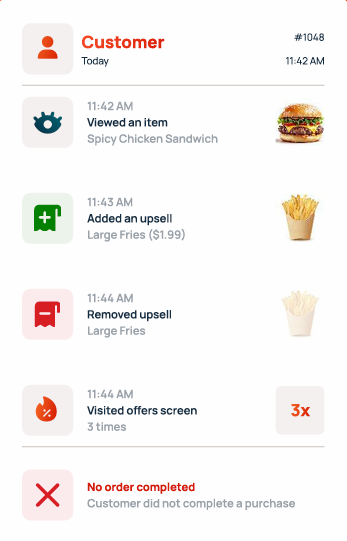
The platform should also support automated campaigns triggered by customer behavior. That can include welcome offers, second-order prompts, abandoned-cart reminders, preemptive reactivation for guests whose visit frequency is starting to slip, and win-back campaigns for customers who have already gone dormant. Instead of relying entirely on a fixed promotional calendar, the brand can respond to what individual guests are actually doing.
Owned-channel marketing can extend into the ordering experience itself. Push notifications, email, SMS, and in-app messages can bring guests back into the channel, while personalized recommendations, contextual offers, and gamified challenges can influence frequency and basket size once they arrive. The result is a restaurant marketing strategy built around changing behavior rather than simply distributing more discounts.
#5 Dynamically adjusting and optimizing upsells and cross-sells
Store-to-store, channel-to-channel, there is a wealth of information on how, what, and when guests order. A brand with a handful of stores might be able to intuit or parse through data enough to set fixed upsell and cross-sell rules that work, but add more locations, channels, and menu items, and setting these rules becomes both inefficient and suboptimal for incremental revenue generation.
A restaurant commerce platform with a recommendation engine does that work for you at scale down to the store level.
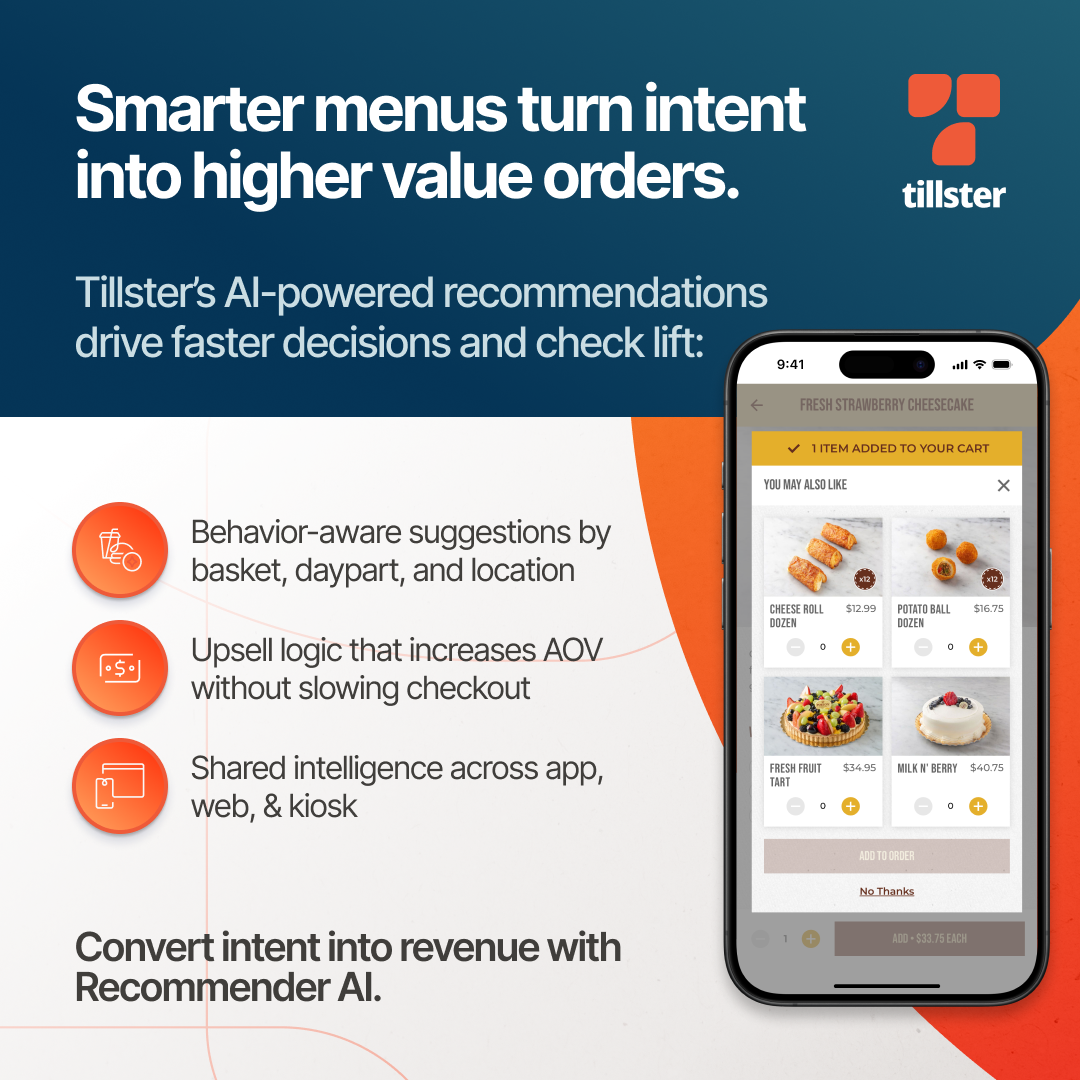
The recommendation engine looks at what a guest has bought before, what's in the cart right now, the time of day, the day of the week, the weather, and what's selling at that specific store. Then it suggests the add-on most likely to land. It works for signed-in guests and for anonymous checkouts, which is most of them.
The payoff is measurable: On average, Tillster’s AI-powered recommendations increase average check by 24% across kiosk, web, and mobile ordering channels.
#6 Integrating with your existing technology stack
Most restaurant brands already have a POS, payment processor, delivery partners, and often an existing loyalty or marketing system. A restaurant commerce platform should connect to those systems without forcing the brand to replace technology that is already working.
The most important integrations usually include:
- POS systems to keep menus, pricing, taxes, availability, and orders connected.
- Payment providers so brands can keep existing processors and support the payment methods guests expect.
- Delivery marketplaces so menus and orders stay synchronized across services like DoorDash and Uber Eats.
- Loyalty and marketing platforms so existing programs and customer data can continue to work across ordering channels.
The key is flexibility. A good platform should let brands keep the systems they want, replace the ones they do not, and handle the connections between them. That makes modernization a phased process instead of a full rip-and-replace project.
#7 Growing restaurant locations and markets
Everything above gets harder as the footprint grows: different POS systems, currencies, tax rules, languages, payment habits, and customer expectations around how they want to order and interact with the brand. This is the pillar that decides whether market fifty takes as long to launch as market five did.
A restaurant commerce platform's job here is to make a new market a configuration instead of a construction project.
One system, many languages and currencies
Localization goes past translation. Region-specific menus and imagery, address formats, date and number conventions, right-to-left layouts, and interface patterns guests recognize, all configured per market across web, app, kiosk, and marketplace rather than maintained as separate applications. Tillster builds this into the core platform, so a brand adds a market without adding a codebase.
An integration layer that absorbs local requirements
POS providers, payment processors, tax rules, and fiscalization requirements vary by country and sometimes by region within one. The platform normalizes those differences so the ordering experience doesn't change when the plumbing does. On tax specifically, Tillster leans on the local store's POS as the tax authority, pulling and validating the exact applicable rate at checkout, which keeps accounting aligned with local law without a custom workaround per market.
Privacy handled by configuration
GDPR in Europe and CCPA in the United States are the two most brands plan for, and more frameworks arrive every year. What matters is whether the platform can flex to a stricter standard without re-architecture. For example, Tillster encrypts guest data in transit and at rest, hashes sensitive personal information, supports regional data hosting where it's required, and provides consent management and data deletion tooling.
A golden menu with local override
SKU normalization gives brands a consistent menu foundation across locations and markets, while configurable permissions determine who can change what. Corporate teams can control brand-wide menu structure and promotions, regional teams can manage market-specific needs, and individual stores or franchisees can be given permission to adjust things like pricing or item availability where appropriate.
That means a brand can maintain consistency without forcing every location into the same operational model. Franchisees do not need identical POS databases for a corporate promotion to work, and local teams can still make the changes they are authorized to make.
The proof point to look for is volume already running through the system across regions. Tillster's platform handles more than 180 million orders a year across 40,000+ locations in North America, Europe, Latin America, the Middle East, and Asia-Pacific.
How a restaurant commerce platform powers every ordering channel
A restaurant commerce platform can power the major ways guests order—from web and mobile to kiosks, delivery marketplaces, call centers, and in-store fulfillment—while giving brands one place to manage how each channel operates.
#1 Your app and website
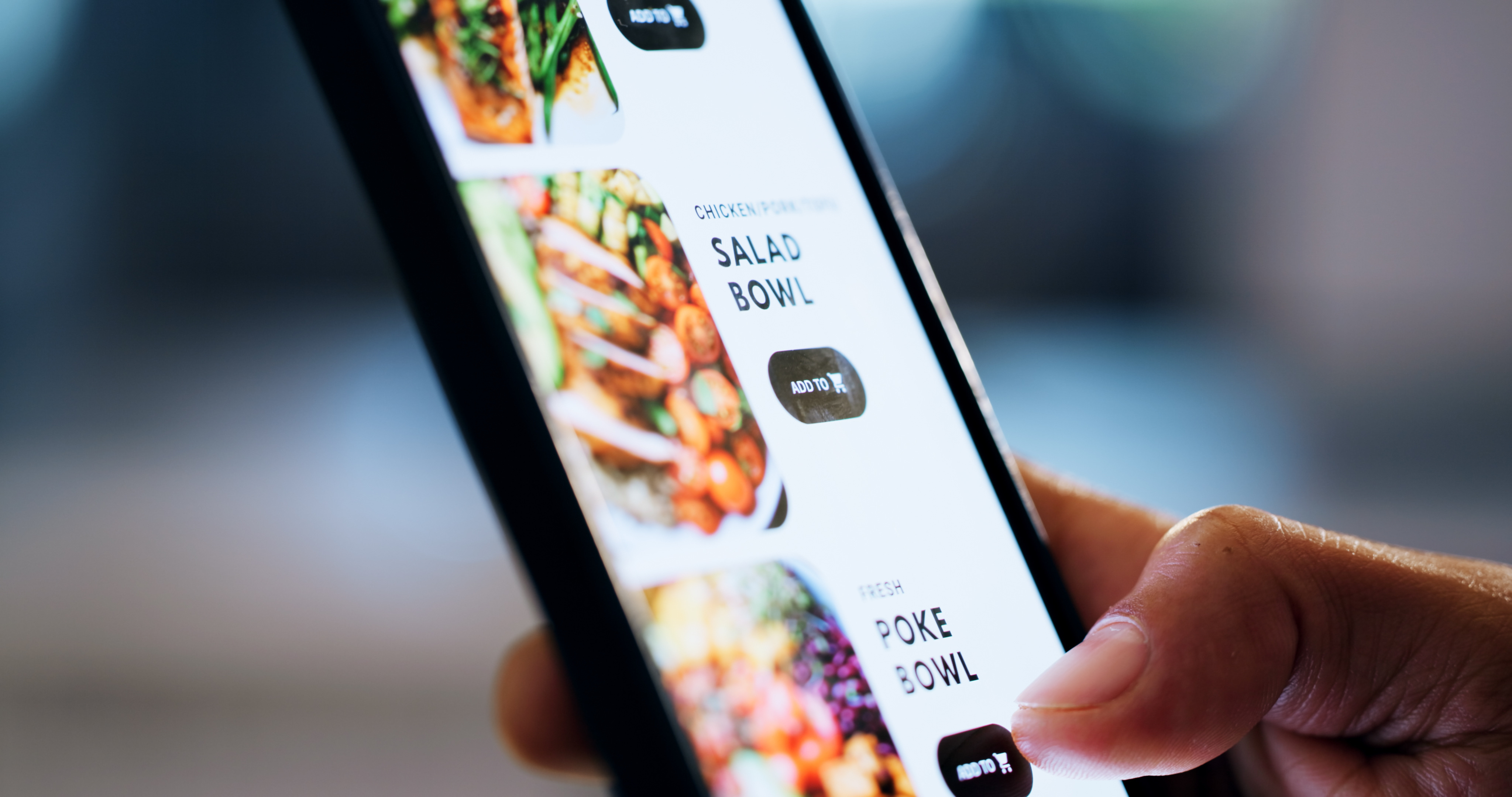
For many guests, your website or mobile app is the front door to your brand. It is where they browse the menu, choose a location, customize an order, redeem rewards, and decide whether completing the purchase feels worth the effort.
That makes web and mobile ordering more than another transaction channel. It is one of the most important places to deliver the speed, convenience, and personalization guests now expect.
When the experience is confusing, inconsistent, or disconnected from what is actually happening in the restaurant, guests can abandon the order or take their business somewhere else. When it works well, it gives customers a direct, convenient way to order while giving the restaurant greater control over the relationship.
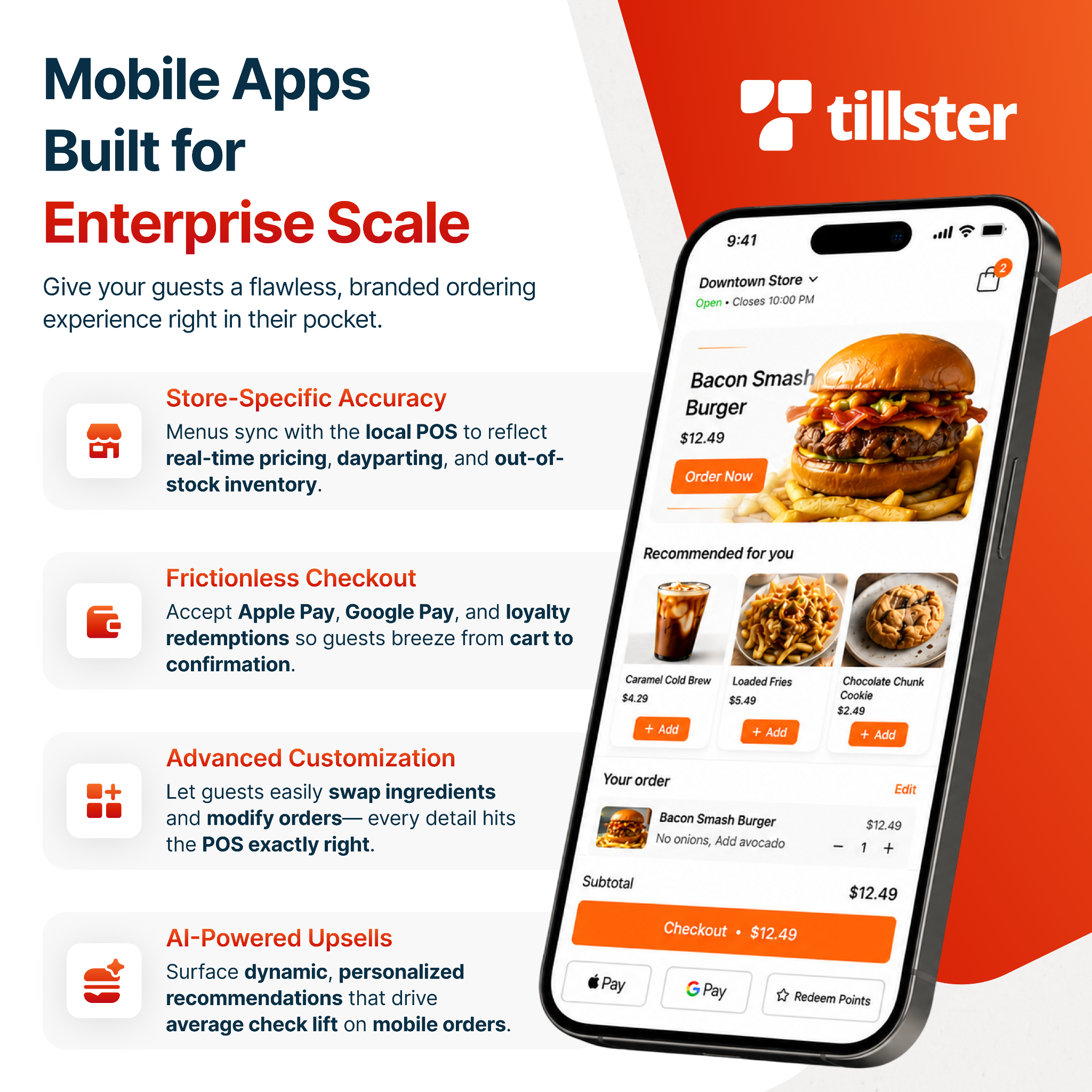
For a strong web and mobile ordering experience, a restaurant platform should support:
- Fast location and store selection, including location-aware experiences that help guests quickly find the right restaurant.
- Accurate, location-specific menus, with the correct pricing, availability, hours, and menu options for each store and daypart.
- Flexible fulfillment choices, including in-store and curbside pickup, drive-thru, and delivery, with the ability to order now or schedule for later.
- Easy menu customization, including the modifier and combo options needed to handle complex restaurant menus without making the experience difficult to navigate.
- Saved favorites and easy reordering so returning guests can quickly repeat previous orders and customizations.
- Personalized recommendations and upsells that surface relevant items based on the guest, the order, or the occasion rather than relying only on generic add-ons.
- Integrated loyalty, rewards, and coupons that are easy to view and redeem within the ordering journey.
- A simple, secure checkout experience, including saved payment methods and popular digital payment options that reduce unnecessary steps.
- Clear timing and order-status updates so guests know when their order will be ready and what is happening after they place it.
- A consistent brand experience across web and mobile, so menus, offers, preferences, and ordering rules do not change unexpectedly when a guest moves between channels.
- Accessibility and localization support so the ordering experience can serve a broad range of guests, markets, languages, and accessibility needs.
#2 Self-service kiosks
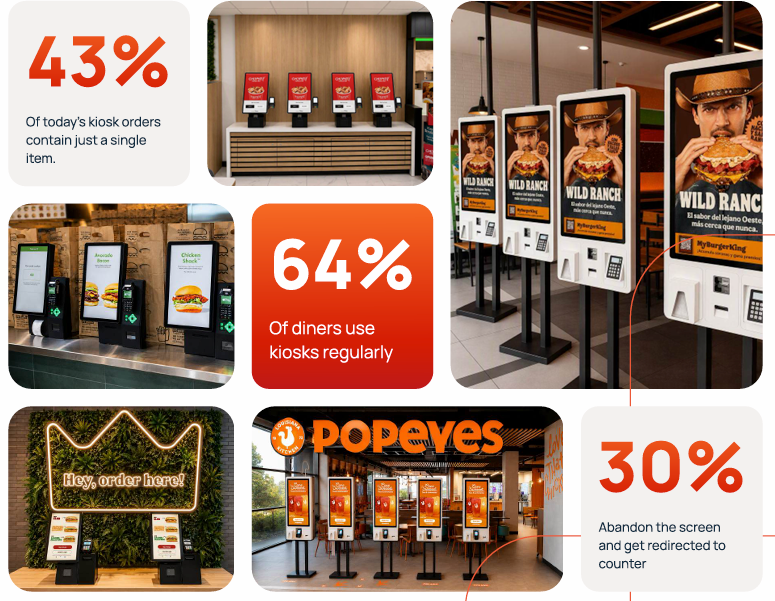
Self-service kiosks have become an important part of the in-store ordering experience, giving guests more control over how they browse, customize, and place an order while helping restaurants keep lines moving during busy periods. They also create a valuable opportunity to surface relevant upgrades, loyalty offers, and menu items at the moment a guest is ready to buy.
But a kiosk only improves the experience when it works as part of the restaurant, not as a standalone screen in the lobby. If the menu is out of sync, loyalty rewards do not work, the interface is confusing, or the device goes down, guests can quickly abandon the kiosk and head back to the counter. That creates more work for employees and undermines the convenience the technology was meant to provide. Tillster has similarly emphasized that kiosk success depends heavily on intuitive UX and tight integration with the rest of the restaurant technology stack.
For high-performing self-service kiosks, a restaurant commerce platform should support:
- Real-time menu, pricing, and availability updates so what guests see on the kiosk reflects what the restaurant can actually sell.
- Reliable POS and kitchen integration so orders flow directly into existing restaurant workflows without requiring employees to re-enter them.
- Resilient in-store operation that helps keep kiosks functioning even when connectivity or other external systems are disrupted.
- Personalized recommendations and upsells that surface relevant add-ons, upgrades, and combinations based on the order or context rather than relying only on generic prompts.
- Integrated loyalty, rewards, and coupons so guests can identify themselves, view available rewards, redeem offers, and earn points without leaving the kiosk journey.
- Simple, intuitive navigation with clear pricing, visual menu choices, and straightforward error messaging that minimizes confusion and abandonment.
- Flexible branding and layouts so the kiosk experience feels like a natural extension of the restaurant’s app, website, and in-store brand.
- Accessible ordering workflows that make the experience usable by a broad range of guests and support applicable accessibility requirements.
- Multiple dining and fulfillment options, including dine-in, takeout, table service, and other store-specific order types.
- Rich menu customization that can handle modifiers, combinations, substitutions, and other complex ordering choices without overwhelming the guest.
- Idle-screen merchandising that turns unused kiosks into promotional surfaces for featured products, offers, or menu imagery.
- Centralized monitoring and device management so restaurant teams can identify kiosk issues quickly and reduce the amount of troubleshooting required from store employees.
The key is to treat kiosks as part of the broader commerce experience. Guests should be able to access the same menu logic, loyalty benefits, personalization, and brand experience they would receive through other ordering channels. That consistency is what turns a kiosk from a piece of hardware into a useful part of the restaurant’s overall customer journey.
#3 Delivery marketplaces
Third-party delivery marketplaces remain an important source of reach and convenience, helping restaurants meet guests wherever they prefer to order. For many brands, platforms like DoorDash, Uber Eats, Grubhub, and Rappi can introduce the restaurant to new customers and generate incremental off-premise demand.
But marketplace volume comes with tradeoffs. High commissions and fees can pressure margins, while disconnected menus, manual order entry, inaccurate availability, and poorly timed orders can create problems for both restaurant teams and guests.
If marketplace orders are treated as a separate stream rather than part of the restaurant’s broader commerce operation, kitchens can become overwhelmed, cancellations increase, and staff are left managing multiple systems at once.
For third-party delivery app management, a restaurant commerce platform should support:
- Direct POS order injection so marketplace orders flow into the restaurant’s existing systems without employees manually reentering them from multiple tablets.
- Centralized menu management that maps store-level POS items into a consistent digital catalog across locations.
- Marketplace-ready menu publishing so item details, modifiers, categories, and other menu information can be distributed correctly to each connected delivery service.
- Channel-specific pricing controls that allow brands to adjust marketplace pricing or markups to account for different channel economics.
- Real-time item availability updates so sold-out products can be removed across connected marketplaces before guests place an order.
- Capacity controls and order throttling that let restaurants slow or temporarily pause marketplace demand when kitchens are overloaded.
- Reliable cancellation handling so cancellation status and reason information stays aligned between the marketplace, restaurant systems, and operational teams.
- Accurate prep and fulfillment timing that helps coordinate when orders enter the kitchen and when delivery drivers should arrive.
- Centralized monitoring and reporting so teams can quickly identify failed orders, menu publishing issues, suspended locations, and other operational problems.
This gives you access to more customers while allowing you to manage marketplaces intentionally—keeping menus accurate, protecting kitchen capacity, controlling costs, and making sure marketplace demand works alongside the rest of the restaurant rather than competing with it.
#4 Call center and WhatsApp ordering
Call centers remain important for restaurant brands with high delivery volume, complex orders, or customers who still prefer to speak with someone. Messaging channels like WhatsApp add another conversational option for guests who want convenience without using a traditional ordering flow.
The problem is that many call center and messaging setups still operate outside the restaurant’s core technology. Agents may have to search for customer information, re-enter orders, or guess whether an item is available. That leads to longer calls, more mistakes, and a less consistent guest experience.

A strong restaurant commerce platform should support the following phone ordering capabilities:
- Real-time menus, pricing, and availability so agents and messaging experiences only offer items the selected restaurant can actually fulfill.
- Direct POS integration so completed orders flow into the restaurant’s existing systems without manual reentry.
- Customer recognition and order history that helps agents quickly access favorites, previous orders, and saved information.
- Easy reordering so regular customers can repeat common purchases without rebuilding the entire order.
- Secure digital payments that let guests complete checkout through protected payment links rather than sharing card information over the phone or in a chat.
- Integrated loyalty, rewards, and coupons so guests can earn points, check balances, and redeem available offers regardless of how they place the order.
- Full menu customization so agents can accurately handle modifiers, substitutions, combinations, and other complex restaurant ordering requirements.
- Order confirmations and status messaging through channels such as SMS or WhatsApp, including updates for pickup, curbside, or delivery.
- Relevant recommendations and upsells that help agents or conversational experiences suggest appropriate additions without relying on generic scripts.
- Centralized agent permissions and reporting so enterprise teams can manage access and monitor order volume, performance, and other operational metrics across locations or regions.
Guests should receive the same menu, loyalty benefits, pricing logic, customization options, and order accuracy whether they tap, type, or talk their way through an order.
#5 In-store fulfillment
Every digital order eventually becomes a physical one. As restaurants take in more orders from apps, websites, kiosks, call centers, and delivery marketplaces, the kitchen and pickup area become the point where all of those channels converge. That makes in-store fulfillment technology critical to turning digital demand into fast, accurate service.
If those orders arrive through disconnected systems, restaurant teams are left sorting through multiple screens, manually prioritizing tickets, and trying to determine what needs to be made, assembled, or handed off next. The result can be slower service, missed items, crowded pickup areas, and added pressure on already-busy employees. Strong fulfillment tools create a single operational view of demand and help teams coordinate preparation and handoff across every ordering channel.
For in-store fulfillment, a restaurant commerce platform should support:
- Unified multichannel order management so orders from apps, websites, kiosks, call centers, and delivery marketplaces appear in one coordinated workflow.
- POS and kitchen integration so digital orders move directly into existing restaurant operations without manual reentry.
- Clear preparation timers and priorities so employees can quickly identify which orders are on time, approaching their target time, or running late.
- Capacity-aware order pacing that helps restaurants adjust promise times or manage incoming demand when the kitchen becomes overloaded.
- Fulfillment-specific handoff information for dine-in, table service, drive-thru, curbside, pickup, and delivery orders, including relevant table, vehicle, or pickup details.
- Guest-facing order status displays that clearly communicate when orders are being prepared or are ready for pickup, reducing uncertainty and crowding around the counter.
- Resilient in-store operation that helps critical kitchen and fulfillment workflows continue even when external connectivity is interrupted.
- Centralized configuration and oversight so multi-unit operators can maintain consistent routing rules, workflows, and fulfillment standards across locations.
Orders should arrive with the right priority, move to the right employees and stations, and carry the information needed to get the correct meal to the correct guest as efficiently as possible.
Where to start
Brands that unify early build a margin advantage that widens with every location they open, because work that used to take weeks starts taking minutes. A regional menu change. An adjusted off-premise markup. A new personalized campaign.
The good news is that getting there doesn't mean tearing anything out. Platforms like Tillster's are modular, so your POS and payment systems stay where they are, and you add capability where the pain is worst. Pick the one piece that's costing you the most right now, whether that's kiosks, delivery management, or a recommendation engine, and phase in the rest from there.
Ready to take control of your ordering channels and guest experience?
Talk to our team to see how Tillster can help you unify channels, simplify operations, and scale with more flexibility.