|
Published on:
July 24, 2026
|
Published on:
July 24, 2026
Top 7 Restaurant Technology Trends 2026
We’ve compiled seven trends that showcase how leading restaurant brands are leveraging technology to meet higher guest expectations while operating smarter, more resilient businesses.
Restaurant technology in 2026 is being shaped less by novelty and more by necessity. Guests are more selective, competition is broader, and tolerance for friction is lower than ever—forcing restaurants to rethink how technology supports both experience and profitability.
What were once approached as digital “add-ons” are now core operating requirements, from personalization and loyalty to fulfillment, capacity, and off-premise control.
We’ve compiled seven trends that showcase how leading restaurant brands are leveraging technology to meet higher guest expectations while operating smarter, more resilient businesses.
#1 Guest value expectations shift—and technology closes the gap
How guests define value is always changing, and in 2026, that’s no different: Price still matters, but it’s not decisive on its own—guests also judge value through execution: food quality, order accuracy, speed, ease, and overall reliability. As dining occasions become more selective, tolerance for friction is shrinking.
Tillster’s 2026 Phygital Index Report shows that diners are fundamentally redefining value, ranking food quality (45%), convenience (44%), and speed (34%) as their top three factors over price. When experiences feel slow, inconsistent, or difficult, guests are quicker to trade down—or choose alternatives entirely. This shift is happening as restaurants face a broader competitive set that includes convenience stores and grocers.
Today, 36% of diners are visiting grocery chains more frequently, and 33% are visiting c-stores more often. Alarmingly for operators, 44% of diners now say c-stores provide better quality food than fast-food and fast-casual chains, meaning restaurants can no longer rely on brand or menu alone.
In response, operators are using technology to remove friction, deliver consistency, and justify the choice to dine with them. The goal isn’t to out-discount retail competitors, but to make restaurant experiences feel just as easy—while delivering superior quality, hospitality, and brand differentiation.
How the guest experience is changing
- Digital convenience is now table stakes, and breakdowns in speed or accuracy are more noticeable than ever
- QSRs are competing for everyday meal occasions against retail and convenience stores, not just other restaurants
What technology-enhanced guest experiences look like in action
- Order-ahead and frictionless payment experiences that match or exceed retail checkout speed
- Consistent digital experiences across channels, layered with brand-led hospitality that retail competitors can’t replicate
- Unified pickup and handoff workflows (status screens and notifications) that reduce confusion and delays
- Real-time menu availability that removes unavailable items across all ordering channels simultaneously
#2 Precise engagement puts the nail in the mass promo coffin
In 2026, promotions and loyalty are no longer about driving traffic at any cost—they’re about influencing behavior without eroding margins. Guests are increasingly resistant to generic discounts and one-size-fits-all rewards, especially as dining occasions become more selective.
Tillster’s 2026 Phygital Index Report found that 45% of diners say their favorite restaurant chain changed in the past year—a massive jump from just 33% in 2025.
As a result, restaurant technology is reshaping promotions into a precision discipline. Instead of relying on broad discounts to stimulate demand, operators are using behavior and transaction data to drive incremental visits, knowing that 74% of diners end up spending additional money when redeeming a free loyalty item.
Loyalty platforms are optimizing for incremental visits, higher AOV, and long-term value. The shift is clear: promotions are no longer about volume; they’re about profitable engagement.
What’s changing in restaurant loyalty and engagement systems
- Mass discounts are giving way to targeted, behavior-driven incentives
- Loyalty success is measured by incremental frequency, AOV, and lifetime value, not enrollments
- Guests expect offers to feel timely, achievable, and personally relevant across all channels
What behavior-driven loyalty looks like in practice
- Unified guest profiles that link purchase history, visit cadence, and channel behavior
- Behavior-based segmentation that differentiates lapsed guests, high-frequency regulars, and high-value occasion diners
- Threshold and progress-based offers designed to nudge the next visit rather than subsidize existing behavior
- Personalized rewards logic that adapts to individual spend patterns and preferences
- Loyalty data dashboards that show which offers drive profitable growth versus discount dependency
#3 AI-powered personalization and recommendations are used at scale
In 2026, AI-driven restaurant personalization is becoming one of the most visible and impactful applications of restaurant technology. AI is now embedded across digital ordering, loyalty, and on-premise experiences, shaping how guests discover, customize, and reorder food.
A 2025 Deloitte survey found that 82% of restaurant executives plan to increase AI spending, with customer experience (60%) and loyalty (31%) cited as the top areas of impact—clear signals that personalization has moved from experimentation to strategic priority. As guests spread fewer visits across more brands, relevance has become essential to earning repeat business.
Tillster research shows guests increasingly value convenience, customization, and the feeling of being recognized.
AI enables restaurants to meet those expectations at scale by adapting menus, surfacing relevant recommendations, and personalizing loyalty interactions across every channel. Rather than relying on static menus or generic offers, brands are using AI to make each interaction feel intentional, seamless, and familiar—driving higher engagement, stronger loyalty, and incremental revenue without deeper discounting.
What’s changing with AI-driven personalization
- Personalization is moving from rules-based logic to machine-learning-driven recommendations
- Guests expect menus and offers to reflect their past behavior and preferences
- Loyalty and ordering systems are increasingly enhanced with AI
What AI-powered personalization looks like in practice
- Smart menus that remember past customizations and surface relevant items automatically on web and mobile applications
- Real-time recommendation engines that drive upsell and cross-sell based on basket composition, time of day, and location
- Personalized loyalty incentives that adapt to individual visit frequency and spend patterns
- Localized recommendations that blend guest preferences with store- and market-level performance data
- AI-informed offers and prompts delivered across kiosks, mobile apps, and web ordering to increase AOV and repeat visits
#4 Unified, composable platforms turn commerce into a real-time operating layer
After years of stacking different solutions for ordering, kiosks, delivery, loyalty, and payments, operators are hitting the limits of fragmented systems that don’t share logic or data. These gaps surface directly in the guest experience as inconsistent menus, missing rewards, incorrect pricing, or broken promise times.
As a result, restaurants are prioritizing unified commerce and operations platforms built on composability—centralized cores with flexible components that can orchestrate ordering, capacity, and fulfillment together.
In fact, 80% of ecommerce enterprise companies have considered or have already moved towards composable architecture. Retailers adopted composable commerce to solve the same problems restaurants face today: inconsistent data, disconnected channels, and fulfillment complexity. Capabilities like centralized catalogs, real-time inventory, BOPIS, and unified loyalty are now standard in retail, and restaurants are increasingly applying that same architectural model to menus, pricing, fulfillment, and guest identity across every channel.
The payoff of a composable restaurant platform is consistency with control: brands can scale channels and partners without creating new silos, while actively managing demand so digital growth doesn’t come at the expense of execution or margins.
What’s changing in restaurant commerce and platform architecture
- Operators are moving away from channel-specific point solutions toward unified, composable platforms.
- Inconsistencies across channels are now seen as systemic failures, not surface-level bugs.
- Commerce systems are expected to orchestrate demand in real time, not just accept orders.
- Technology decisions are increasingly based on interoperability, shared data models, and API flexibility.
What real-time, composable commerce looks like in practice
- Composable architectures that allow new channels or partners to plug in without creating new operational silos
- Centralized menu, pricing, and promotions that propagate instantly across all channels
- Unified order, customer, and loyalty data shared across app, web, kiosk, counter, delivery, and curbside
- Dynamic promise-time engines that adjust prep and pickup times based on live kitchen capacity
- Item- and channel-level gating to remove constrained items or pause channels during peak load
- Capacity-aware throttling and intelligent routing that prioritize manageable, higher-margin orders
#5 AI is embedded into the everyday mechanics of restaurant operations
In 2026, operators are moving past experimental use cases and expecting AI to actively help managers run better shifts, protect margins, and reduce operational guesswork. Today, 86% of operators report they strongly or somewhat agree they are comfortable using AI.
AI investments are becoming more operationally grounded. Brands are prioritizing AI that interprets real-time data and delivers clear, actionable recommendations managers can trust. The goal is intelligent guidance that improves labor efficiency, inventory accuracy, and fulfillment reliability—helping teams make better decisions faster, especially during peak and high-stress periods.
What’s changing in restaurant operations
- AI is shifting from experimental use cases to core operational support.
- Operators expect AI outputs to be explainable, actionable, and immediately usable by managers.
- Success is measured by labor efficiency, accuracy, and margin protection, not novelty or adoption alone.
What AI-embedded restaurant operations look like in action
- Demand forecasting models that predict volume by daypart, channel, and location
- AI-driven labor recommendations that align staffing levels with forecasted demand
- Predictive inventory systems that flag potential shortages, over-prep, or abnormal usage
- Anomaly detection that surfaces waste, theft, or vendor discrepancies automatically
- Promo cannibalization analysis that predicts when offers will shift demand rather than grow it
- Improved prep-time and promise-time accuracy driven by AI-informed capacity and throughput modeling
#6 Personalization moves onto every restaurant screen
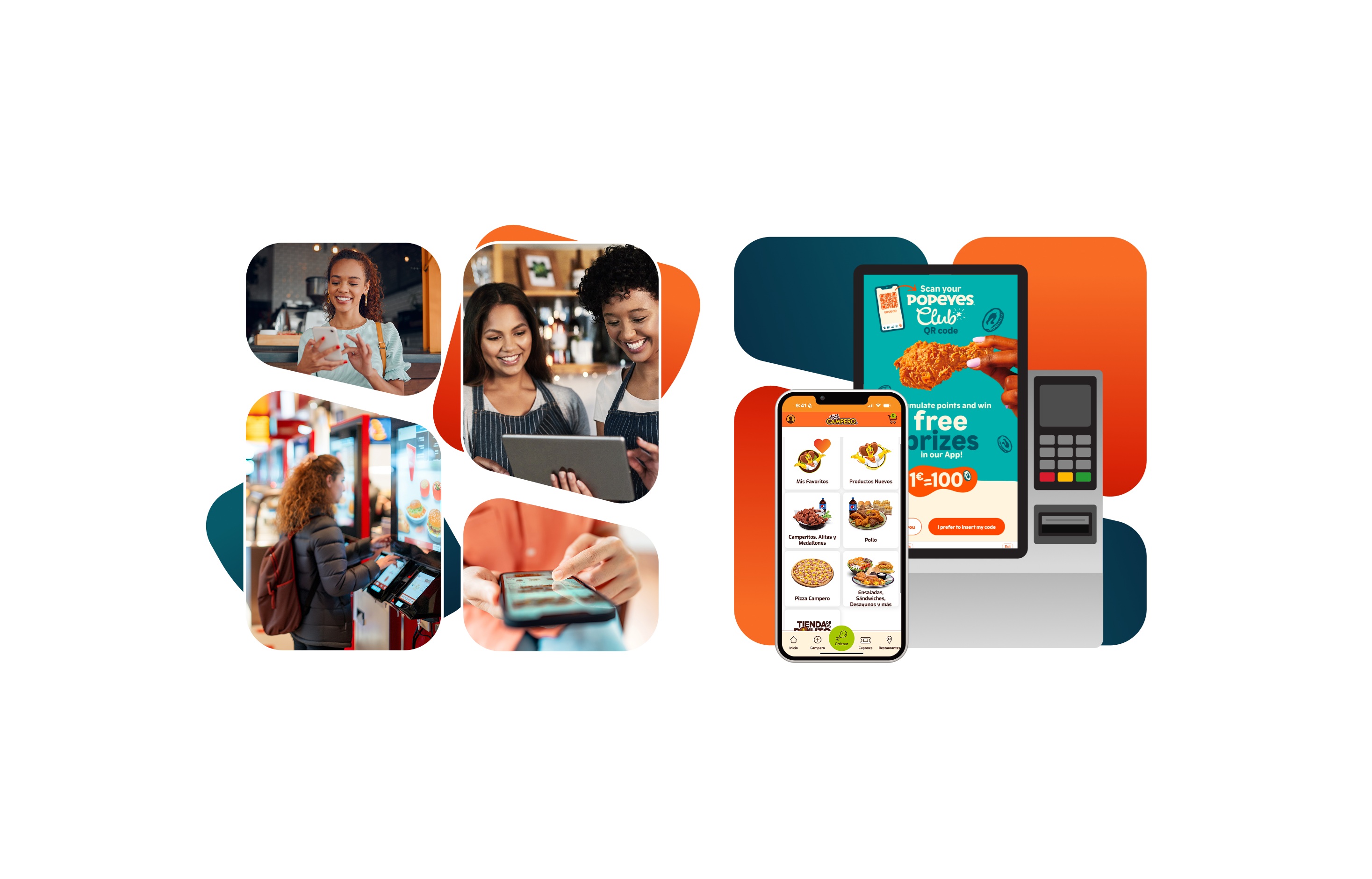
Kiosks, tableside tablets, digital menus, and drive-thru boards are becoming high-impact personalization and conversion surfaces. Guests increasingly choose self-service when it feels faster, clearer, and more tailored to their preferences.
Tillster’s 2026 Phygital Index Report shows that 64% of diners now order via an in-store self-service kiosk multiple times per month (up from 61% in 2025), and 71% say they are equally or more satisfied ordering via a kiosk compared to a cashier. However, operators cannot just put a screen in a lobby. When digital and physical systems don't match, guests walk away: 31% of diners cite confusing interfaces as a primary reason kiosks fail, and 23% are frustrated by the inability to seamlessly redeem loyalty points on-premise.
As a result, operators are rethinking on-premise self-service as a strategic technology layer tied directly into brand identity, menu intelligence, and operations. When self-service technology, like custom restaurant kiosks, are connected to loyalty, real-time availability, and fulfillment workflows, they drive higher check sizes, faster ordering, and smoother pickup—all without adding pressure to staff.
The focus is shifting from “putting in a screen” to designing intelligent self-service journeys that increase throughput while still feeling personal.
What’s changing in self-service restaurant technology
- Kiosks are shifting from labor substitution tools to high-intent engagement and upsell surfaces
- Generic menus across kiosks, menu boards, and drive-thru screens are underperforming compared to personalized, context-aware experiences
- Self-service success increasingly depends on tight integration with loyalty, menu, and kitchen systems
What next-generation self-service looks like in practice
- AI-driven upsell and cross-sell logic based on past behavior, time of day, and basket composition
- Localized and daypart-specific menus that adjust dynamically across kiosks, digital menu boards, and drive-thru
- Real-time item availability and modifier enforcement to prevent downstream errors
- Kiosk journeys tied to loyalty accounts, enabling recognition, saved favorites, and faster reordering
#7 Delivery aggregation and management become easier than ever
In 2026, off-premise technology strategies are being rebuilt around profitability, not just reach. Delivery and pickup are no longer viewed as incremental volume channels—they’re margin-sensitive systems that can either protect or erode unit economics depending on how they’re managed.
As a result, restaurants are shifting from “accept everything everywhere” to tech-enabled control of off-premise demand. This is being driven directly by consumer 'fee fatigue.' According to the 2026 Phygital Index, 61% of diners have abandoned delivery orders simply because service fees felt too high, pushing 47% to actively choose to purchase fast food directly at the restaurant instead.
The focus is on using aggregation intelligently—routing, pacing, and pricing orders based on profitability and capacity—while steadily pushing more repeat off-premise demand toward owned ordering channels like mobile apps and brand websites.
What’s changing in off-premise restaurant commerce management
- Off-premise channels are now evaluated on contribution margin, not total order count
- Third-party marketplaces are treated as acquisition tools, not primary growth engines
- Operators expect technology to actively manage pricing, availability, and fulfillment, not just pass orders through
What profit-managed off-premise execution looks like in practice
- Delivery aggregation and orchestration to manage multiple marketplaces through a single control point.
- Channel-level profitability controls that adjust availability, menus, or pricing by daypart
- Conversion flows that move third-party guests to first-party ordering via loyalty, receipts, and packaging
- First-party ordering experiences on mobile apps and websites designed for faster reordering, saved favorites, and loyalty recognition