
|
Published on:
August 12, 2026
|
Published on:
August 12, 2026
5 Restaurant Marketing Strategies That Increase Order Frequency and Value
These five new restaurant marketing strategies use connected data, personalization, and AI to grow order value, frequency, and loyalty.
One of the fastest ways to waste a restaurant marketing budget is to keep sending the same discount to everyone.
Five guests can all look like frequent customers and still have five very different reasons for ordering. One may be motivated by price. Another values speed. A third returns for a specific menu item, while someone else orders only when pickup fits into their routine. Treating those customers as one audience means missing what actually drives their behavior—and often paying to encourage purchases they would have made anyway.
The better opportunity is hiding in the signals customers already generate. What do they browse but never buy? Where do they drop out of the ordering journey? Which offers do they ignore? Is their order frequency increasing, holding steady, or beginning to decline?
Your owned channels—website, app, kiosk, loyalty program—already capture much of that information. When those signals are connected, restaurants can move beyond broad promotions and start shaping more relevant incentives around what each customer is most likely to do next.
The New Rules of Restaurant Marketing explores how brands can use behavioral data, segmentation, and predictive insights to increase order value and frequency through owned channels—without defaulting to bigger discounts. The five strategies below are only a snapshot of what connected restaurant marketing can do.
The foundation: connected customer data
Effective restaurant marketing strategies require a few core capabilities working together:
- A customer data platform that unifies activity across channels.
- Segmentation based on spend, frequency, preferences, and lifecycle stage.
- Loyalty and couponing tied to specific customer actions.
- Email, push, SMS, and in-app messaging that activates each segment.
- Predictive models that identify likely future behavior.
Together, these capabilities give marketers the context to decide who to target, what behavior to encourage, when to intervene, and whether the campaign produced incremental value.
That is the shift from having a collection of restaurant technologies to having a connected marketing system. Once the foundation is in place, brands can turn customer signals into more relevant offers, smarter retention efforts, and more profitable ordering behavior.
Here are five restaurant marketing strategies that put that connected data to work.
#1 Personalize the offer—not just the message
Personalization is most effective when it shapes the substance of the promotion, not only how the message is presented.
The offer itself should reflect the guest’s behavior. A customer who normally spends $10 should not receive the same minimum-spend promotion as someone who regularly spends $30.
Instead, restaurants can group guests by average order value and give each segment a realistic threshold above its normal spend.
In one Tillster campaign, customers receiving tiered offers spent 21% to 58% more than their historical averages. When a similar strategy was used with lapsed guests, returning customers spent 30% to 51% more than before.
The customer simply sees a relevant offer. The personalization happens behind the scenes.
#2 Reward incremental behavior
Many promotions discount existing demand rather than create new demand.
A stronger approach begins with the behavior the restaurant wants to influence, such as:
- Placing one additional order.
- Spending more than usual.
- Trying a new daypart.
- Switching to pickup.
- Returning before ordering frequency declines.
The reward is issued only after the customer completes that action.
In a Tillster campaign involving more than 40,000 users, customers who completed personalized frequency challenges were 2.3 times more likely to increase their ordering frequency. The program generated more than 6,000 incremental orders.
This turns promotions into performance-based incentives rather than automatic discounts.
#3 Create one customer profile across every channel
Guests see one restaurant brand. Restaurant systems often see separate app, kiosk, website, loyalty, and in-store customers.
That fragmentation can lead to inaccurate segments, irrelevant messages, and rewards that do not follow the guest across channels. It reflects the limits of restaurant tech 1.0: adding digital tools one by one without fully connecting them. Tech 2.0 is about making those systems work together, so every interaction contributes to a more complete understanding of the customer.
A unified profile connects those interactions. It gives restaurants a clearer view of each customer’s spend, frequency, preferences, loyalty activity, and ordering methods.
It can also help brands influence more profitable behavior. For example, a delivery-heavy customer could receive an offer that applies only to order-ahead pickup.
A unified profile gives restaurants a foundation for making smarter decisions across loyalty, messaging, channel strategy, and the broader customer journey. Every interaction can be shaped around what is most relevant and valuable for both the guest and the brand.
#4 Use the full customer journey to inform marketing
A completed transaction tells you what a customer bought. The interactions leading up to it reveal what may influence their next decision.
Menu views, abandoned carts, offer engagement, item removals, coupon redemptions, and ordering patterns all help build a more complete picture of customer intent. Connected to a unified profile, these signals can trigger more relevant segments, messages, and incentives.
For example, a guest who repeatedly considers a product without purchasing may respond to a targeted offer, while someone who regularly redeems the same type of promotion may be ready for a sequenced incentive that encourages a higher-value action.
The goal is to recognize meaningful patterns and use them to deliver the right next experience.
#5 Predict what customers do next
Traditional retention campaigns usually rely on fixed rules, such as sending a win-back offer after a guest has not ordered for 30 or 60 days. The problem is that those rules treat every customer the same, even though ordering habits vary widely.
Predictive models add context by comparing each guest’s recent activity with their own established behavior. They can help estimate churn risk, purchase likelihood, future customer value, and the probability that a guest will respond to a particular offer.
Consider a customer who has ordered every seven days for a year but gradually shifts to every 10 or 11 days. A standard lapse rule still considers that guest active. A predictive model can identify the change in cadence as an early sign that the habit is weakening.
That allows the restaurant to act while the relationship is still warm. Instead of waiting to send a large win-back discount after the customer disappears, the brand can deliver a smaller, more relevant incentive designed to restore the guest’s normal ordering pattern.
The value of prediction is not simply knowing what a customer may do next. It is knowing early enough to influence the outcome.
Measure the behavior that changed
Campaign KPIs should match the intended outcome.
A spend campaign should measure lift above historical average order value. A frequency challenge should track incremental orders. A pickup campaign should compare the cost and profitability of the customer’s previous and new ordering methods.
Useful metrics include:
- Incremental order frequency.
- Average order value.
- Customer retention.
- Owned-channel usage.
- Profit after promotional cost.
- Customer lifetime value.
Clicks and open rates can help diagnose performance, but the most important question is whether the campaign changed customer behavior profitably.
Explore the new rules of restaurant marketing
Your app, website, kiosks, and loyalty program are more than ordering tools. Together, they can show what customers value, where they hesitate, and what may motivate them next.
Download The New Rules of Restaurant Marketing to explore the campaign frameworks, personalization strategies, and real-world results behind these ideas.
Turn customer signals into growth with Tillster
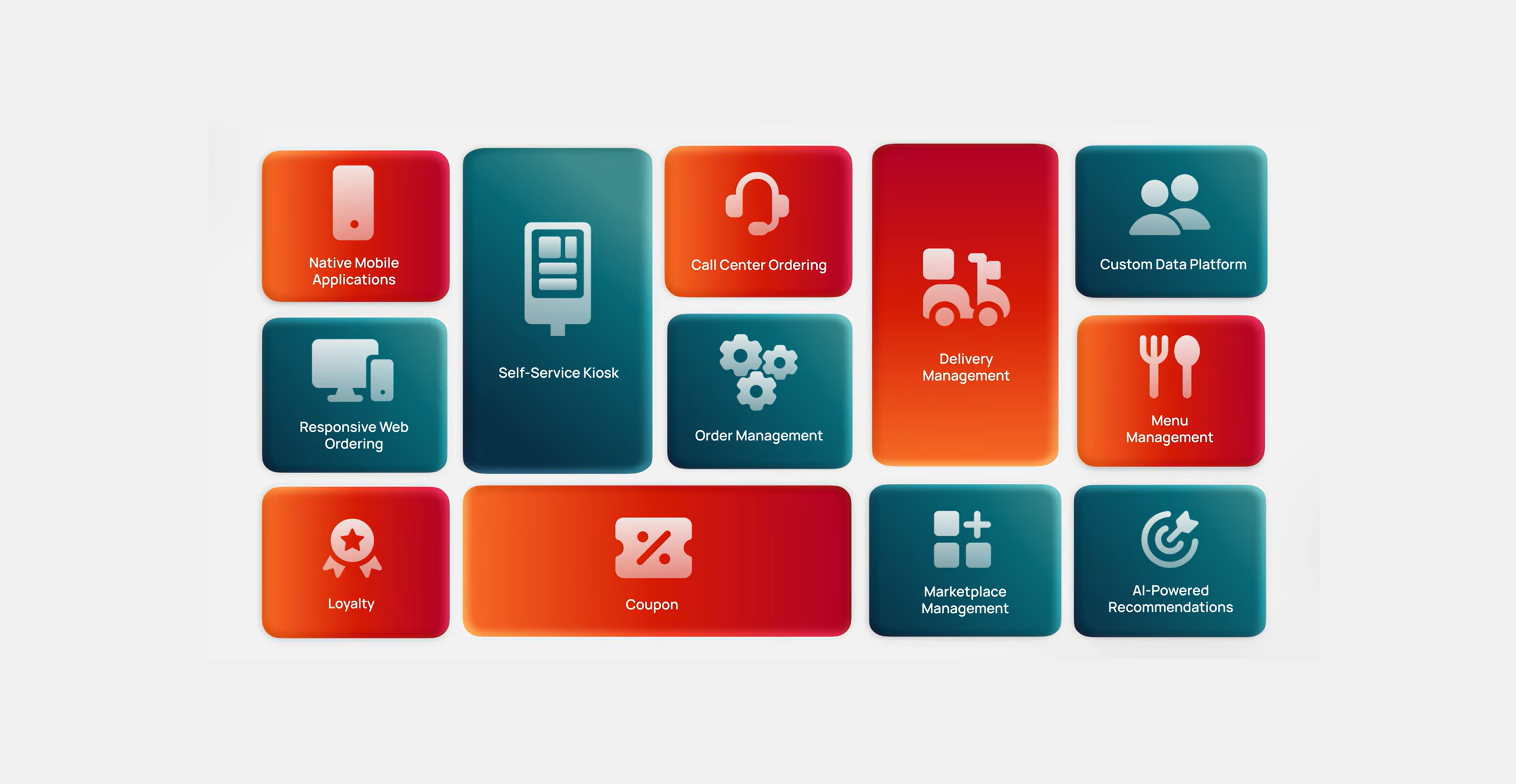
Tillster brings digital ordering, kiosks, loyalty, couponing, customer data, segmentation, recommendations, and targeted messaging together in one restaurant-focused ecosystem.
That gives brands the tools to recognize guests across touchpoints, personalize offers, automate campaigns, and measure whether those efforts increased spend, frequency, or retention.
With Tillster, owned channels become more than places to accept orders. They become a connected growth engine for building stronger, more profitable customer relationships.
Popular Blogs

Restaurant marketing strategy FAQs
What role does customer relationship management play in restaurant marketing?
A customer relationship management tool gives restaurants a clearer view of each guest’s ordering history, preferences, frequency, and loyalty activity.
When a CRM connects to online ordering and loyalty data, brands can create more relevant segments and use them in email marketing, push notifications, and other email campaigns.
That supports stronger customer loyalty while reducing the cost of sending broad promotions to people who may never respond. It also makes return on investment easier to measure because each campaign can be tied to a specific customer action.
Which restaurant marketing ideas are most effective for increasing repeat orders?
The strongest restaurant marketing ideas focus on changing a specific behavior rather than discounting every transaction. Examples include personalized spend thresholds, frequency challenges, win-back campaigns, and offers tied to a new daypart or ordering method.
Loyalty campaigns can also connect with local events, community engagement, or sustainability initiatives when those themes align naturally with the brand.
Whatever the tactic, success should be measured by incremental orders, higher spend, stronger customer loyalty, and profitable return on investment.
How can social media support a restaurant’s owned-channel strategy?
Social media can support brand awareness and discovery when it reinforces the restaurant’s branding and gives customers a clear next step.
Using social media platforms like Instagram and TikTok, paired with influencer marketing, amplifying user-generated content, and producing short-form video content can showcase menu items, employee stories, local events, and community engagement in ways that promote shareability and word-of-mouth.
The strongest posts connect that attention to an owned channel through a focused CTA, such as joining loyalty or ordering directly.
However, social media’s influence may be more limited than marketers assume. According to the 2026 Phygital Index Report, 64% of diners say it does not affect where they choose to eat—making the experience after the click, from menu discovery to ordering, even more important.
How can an online menu support more personalized marketing?
An online menu can reveal more than what customers ultimately purchase. It can show which items they view, add, remove, or repeatedly consider, helping restaurants identify interest and possible barriers to conversion.
Those signals can inform personalized recommendations, limited-time offers, and product-specific CTAs.
Restaurants can also use QR codes in-store, on packaging, or in printed materials to direct guests to relevant menu pages, loyalty enrollment, or first-party ordering experiences.
How do owned channels strengthen a restaurant’s online presence?
A restaurant’s website, app, and loyalty program give the brand more control over its online presence and customer experience. That foundation becomes even stronger when paired with an accurate Google Business Profile, consistent information on Google Maps, and a clear local SEO strategy.
Delivery apps such as DoorDash and Uber Eats can also expand a restaurant’s visibility and introduce the brand to new customers. The strongest approach uses those platforms for reach while giving guests a clear reason to move into owned channels, where the restaurant can build a direct relationship, personalize the experience, and encourage repeat ordering.
Online reviews on Yelp, Tripadvisor, OpenTable, and Google also affect local search visibility and customer confidence.