
|
Published on:
July 23, 2026
|
Published on:
July 23, 2026
Restaurant Customer Retention: Why 45% of Guests are Churning
Restaurant customer retention is falling as 45% of diners switch favorites in 2026. Learn why loyalty is fading and how smarter rewards, personalization, and seamless experiences win repeat visits.
According to the 2026 Phygital Index Report, 45% of diners say their favorite restaurant chain changed in the past year — a sharp rise from 33% in 2025. For the restaurant industry, that is a clear warning sign: habitual loyalty is fading, and restaurant customer retention now depends on relevance, convenience, and a stronger customer experience.
While food quality and rising prices remain important, the deeper issue is that outdated customer loyalty strategies are failing. Many restaurant operators still rely on generic discounts, static punch cards, or disconnected digital tools that do little to build lasting customer relationships. Meanwhile, more agile brands are using customer data, automation, and personalized engagement to win repeat customers and grow profitability.
Here is why nearly half of diners are moving on from their old favorites — and what successful restaurant operators can do to improve customer retention rate, drive repeat business, and build a loyal customer base.
Why is restaurant loyalty churn so high in 2026?
#1 Legacy loyalty programs are losing power
A traditional loyalty program built around generic points and occasional discounts is no longer enough. Diners expect a customer loyalty program that feels personal, easy to use, and worth joining.
Dissatisfaction with fast-food and fast-casual loyalty programs has nearly doubled to 28%, up from 15% in 2025. At the same time, 35% of diners still do not belong to any restaurant loyalty program at all.
Even enrolled members often disengage. More than half of loyalty members fail to consistently check for rewards before ordering. That means if rewards are hidden inside mobile app UIs or difficult to redeem during online ordering, the moment to influence behavior has already passed.
For restaurant marketing teams, this is a critical lesson: loyalty should not create friction. It should simplify decisions, reward existing customers quickly, and keep your brand top of mind.
What to do instead:
- Make perks visible at checkout and in-store
- Offer simple progress tracking toward rewards
- Use SMS and email marketing reminders before mealtime decisions
- Reward first-time guests quickly to encourage second visits
- Use CRM tools to identify inactive members and re-engage them
#2 You’re not tailoring the loyalty experience to your segments
Treating every guest the same is one of the biggest mistakes in customer retention strategy. Diners have different preferences, motivations, and expectations. Here’s a look at how just two segments, Gen Z and Millennials, engage in dining differently, according to our 2026 data. The data might counter some of your assumptions about these demographics.
Gen Z is the most fluid when it comes to restaurant loyalty, with 51% saying their favorite chain changed in the past year. Only 13% are very satisfied with current loyalty programs, while 31% are actively dissatisfied.
For Gen Z, customer loyalty is earned through:
- High-quality food: 52% of Gen Z diners rank food quality as their top factor when choosing a restaurant.
- Direct, first-party experiences: Gen Z is selectively pulling back from third-party delivery apps to purchase directly at the restaurant, with 45% planning to reduce their third-party app usage over the next 12 months.
- Experiences over discounts: Earning their loyalty requires going beyond generic discounts to deliver high-quality food options.
While it is often assumed this generation is driven by trends, social media influence is actually dropping dramatically. In fact, 64% of all diners report that social media does not influence their dining choices. For Gen Z, tangible food quality matters far more than transactional rewards.
Millennials remain highly responsive to structured rewards, speed, and convenience. With rising costs, they actively recalibrate their spending to keep dining out; 40% are choosing lower-priced items and 29% say they use loyalty programs more often to offset spending.
For Millennials, winning strategies include:
- Frictionless convenience: 49% of Millennials prioritize convenience as a top dining factor.
- Speed of service: 37% rank speed as a primary decision driver.
- Price mitigation perks: For Millennials, loyalty value and price mitigation are tightly linked.
The takeaway for restaurant operators: Segmentation and precision relevance matter. One-size-fits-all menus and static mass discounts weaken customer engagement.
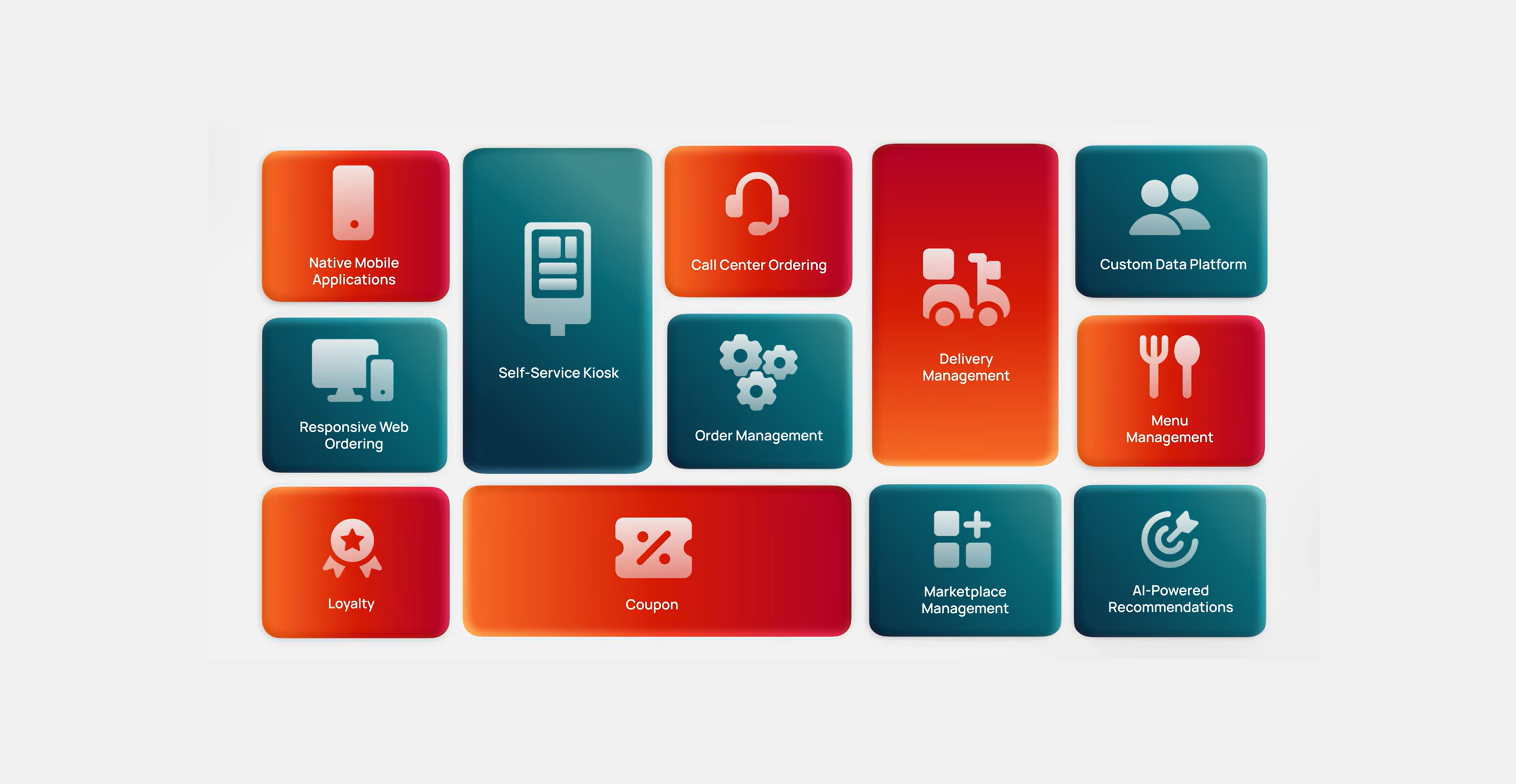
Earning loyalty today requires shifting from generic points programs to adaptive, behavior-driven engagement that responds to exactly how different demographics define value. This can only be achieved by collecting high-quality data about your customers' behavior across your ordering ecosystem via a customer data platform (CDP).
#3 Broken digital experiences are damaging trust
Today’s diners expect loyalty benefits to follow them everywhere — app, website, kiosk, drive-thru, and in-store. When systems are disconnected, customer satisfaction drops quickly.
Among diners using self-service kiosks, 23% cite the inability to redeem loyalty points or coupons as a major frustration. If customers cannot access rewards because they chose a different ordering channel, your system is punishing engagement instead of rewarding it.
That damages trust, lowers repeat visits, and weakens long-term success.
What strong brands do differently:
- Integrate loyalty across all ordering channels
- Connect CRM systems to every touchpoint
- Use customer feedback to remove friction
- Ensure service quality matches digital convenience
- Sync promotions across kiosks, websites, and mobile apps
How to stop loyalty churn and improve restaurant customer retention
To compete in 2026, restaurants must move from passive rewards to predictive relevance - a major theme of Restaurant Tech 2.0. It is important to distinguish that loyalty programs are not the same as Loyalty with a capital L. While rewards can drive incremental spending and short-term behavior, true emotional and habitual allegiance is shaped by a broader mix of considerations, ranging from food quality and freshness to order accuracy and personalization
However, effective loyalty programs will actively reinforce and amplify these core elements. When it comes to optimizing your loyalty program, the brands winning new customers and retaining their regulars are using customer behavior signals to act before habits break. Here is how you can implement a loyalty program that actively reduces churn:
#1 Make rewards tangible
Invisible rewards create zero excitement. Diners say the best programs clearly track progress toward rewards and are effortless to understand.
- Visual progress tracking: Implement frequency-based "digital punch cards" that visually mark upcoming rewards where the required point level has not yet been reached, ensuring guests always know how close they are to their next perk.
- Non-purchase bonuses: Configure events that automatically award points or perks without a transaction, such as instant sign-up bonuses, referral bonuses, or birthday rewards.
- Omnichannel mobile wallets: Give guests a digital wallet with a QR code or short code that can be scanned at the in-store POS, self-service kiosk, or used directly in the app for effortless, instant redemption
Smart operators can turn redemptions into upselling opportunities. For example, when a guest redeems a free burger, present them with priced add-ons like “adding bacon” or “upgrading to a combo.” This makes the reward feel more personal while driving incremental spend on a "free" item.
#2 Trigger relevance early
Do not wait for customers to open your app. Use automation, geolocation, and customer data to send personalized offers before they choose where to eat.
- Competitive geofencing: Utilize location-based services to trigger a "proximity offer push" when a guest enters a geofenced area, or send a competitive offer directly to their phone the moment they walk past a competitor's store.
- AI-powered predictive scoring: Use predictive models to identify customers who are highly likely to place an order within the next 7 days. In one Tillster campaign, targeting this specific segment with a 7-day in-app coupon and a push notification generated a 61% higher order rate.
- Behavioral dynamic content: Trigger personalized emails right before mealtime where the images and offers automatically populate based on the menu category the user purchases most frequently, alongside their localized preferred store information.
#3 Reward behavior before it breaks
Traditional loyalty programs reward customers after they have already shown repeat behavior. Smarter systems use segmentation and behavioral signals to identify when a guest is at risk of slipping — and respond before the habit is lost.
- Automated bounce backs: Don't wait for habits to form; build them early. For example, trigger an automated campaign that sends a medium-value coupon 7 days after app registration to drive their first mobile order, and a follow-up offer at 30 days to drive the second.
- Zero-touch dynamic segments: Leverage an integrated CDP to build audiences like “customers who haven’t ordered in 30 days.” The system continuously evaluates behavior in real-time, meaning users automatically enter or exit these segments without manual updates, triggering immediate churn-prevention offers.
- Gamified frequency challenges: Instead of generic discounts, segment users into low-, mid-, and high-frequency tiers and send them personalized, time-sensitive order goals based on their historical habits. This exact tactic resulted in 75% of participants ordering above their average, generating a 2.3x higher order frequency.
- AOV-targeted minimum spends: If a high-value guest is slipping, send them a highly targeted offer with a minimum spend requirement calibrated precisely to their historical Average Order Value (AOV). This protects margin while re-engaging the guest, proven to make customers spend 21% to 58% more than their historical average
Restaurant loyalty has changed—has your strategy?
Restaurant loyalty in 2026 is earned through relevant rewards, seamless experiences, and customers feeling recognized every time they order. Brands that personalize engagement and remove friction will win more repeat visits, while outdated programs will keep losing customers.
If your loyalty strategy still relies on static offers, it’s time to upgrade. Connect with Tillster to see how smarter data, automation, and omnichannel loyalty can help grow retention and repeat revenue.
Popular Blogs

Restaurant customer retention FAQs
Why does restaurant customer retention matter more than customer acquisition in 2026?
With 45% of diners reporting their favorite chain changed in the past year, up from 33% in 2025, holding onto existing guests has become harder and more valuable. Retaining a customer is more cost-effective than constant customer acquisition, and loyal guests order more often over time, which lifts customer lifetime value.
For restaurant owners, the math is straightforward: relevant, personalized engagement that keeps regulars coming back protects revenue that generic discounts and static punch cards no longer secure.
How can restaurant owners use customer data to reduce loyalty churn?
The brands winning repeat business collect high-quality signals on customer preferences across their entire ordering ecosystem, typically through a customer data platform connected to their customer relationship management tools. That data surfaces valuable insights about who is at risk of slipping away and when.
What do diners expect from a restaurant loyalty program today?
Customer expectations have shifted toward programs that feel personal, are easy to use, and deliver value across every channel. Dissatisfaction with fast-food and fast-casual loyalty programs has nearly doubled to 28%, and 35% of diners still belong to no program at all.
Guests want rewards they can actually see and redeem during the moment of decision, whether they order on an app, website, kiosk, or in-store. Special offers only build loyalty when they reach the right guest at the right time and reinforce the broader dining experience rather than adding friction to it.
What's the difference between a loyalty program and real loyalty?
A loyalty program is the mechanics: points, perks, and special offers that drive incremental spend and short-term behavior. Real loyalty is the emotional and habitual allegiance that keeps a guest choosing you without a coupon. The blog makes this distinction deliberately, because the two are easy to confuse.
Real loyalty is shaped by a wider mix of factors, food quality and freshness, order accuracy, and personalization, that a discount alone can't manufacture. The point for restaurant owners is that a program works best when it reinforces those core elements rather than substituting for them. A well-run program amplifies an already strong dining experience; it can't rescue a weak one.