
|
Published on:
July 24, 2026
|
Published on:
July 24, 2026
How to Win Over Customers to Your First-Party Ordering Channels
Here’s how restaurants can increase first-party orders instead of losing orders to third-party delivery marketplaces.
Third-party marketplaces like Uber Eats, DoorDash, and Grubhub are undeniable engines for customer acquisition and brand discovery. However, for many restaurants, relying on them exclusively can create a margin drain while masking the valuable customer data needed to build lasting relationships.
More importantly, consumer behavior is shifting: diners are becoming fed up with rising costs, with 61% abandoning delivery orders specifically because service fees felt too high, according to Tillster’s 2026 restaurant consumer report.
At the same time, habitual restaurant loyalty is breaking down. Today, 45% of diners say their favorite restaurant chain has changed in the past year alone. This means the sheer convenience of a third-party delivery app is no longer enough to guarantee a customer will keep returning to your specific brand.
For restaurant operators, this creates a massive opportunity. As guests seek to avoid third-party fees, leading brands are capturing this shifting audience through their owned first-party channels. First-party ordering gives restaurants full control over the guest relationship, direct access to actionable customer data, and the ability to drive higher-margin transactions without aggregator commissions.
How to increase first-party restaurant orders
Third-party food delivery apps succeeded because they made ordering feel effortless, reliable, and familiar. Many restaurant-owned channels still fall short, creating friction through clunky UX, inconsistent experiences across app, web, and in-store touchpoints, limited customization, and loyalty programs that feel disconnected or hard to use. When direct ordering feels even slightly harder, customers default back to aggregators.
To grow first-party orders, restaurants need to make direct ordering the better experience. That means eliminating friction, delivering faster and more personalized interactions, and giving customers clear reasons to order direct through convenience, rewards, and seamless cross-channel experiences. The following strategies show how leading brands are making that shift.
#1 Make your website and app experiences better than third-party apps
Third-party marketplaces didn’t win because customers love paying extra fees—they won because they made ordering feel fast, familiar, and frictionless. Over time, diners became accustomed to features like saved payments, one-click reordering, live delivery tracking, and consistent experiences across every device.
If restaurants want customers to order directly, their apps and websites cannot simply “exist.” They need to feel just as seamless and convenient as the platforms customers already use every day. In many cases, the direct experience should feel even better by offering more personalization, better rewards, easier customization, and a stronger connection to the brand itself.
Why a better digital experience changes customer behavior:
A fast, intuitive experience reduces friction, speeds up checkout, and creates confidence that the restaurant will deliver a smooth experience every time.
Restaurants that invest in stronger digital experiences also gain a major competitive advantage over aggregator apps: full control over the customer journey. First-party channels can integrate loyalty seamlessly and create a branded experience that strengthens long-term retention instead of competing against dozens of other restaurants on the same screen.
How restaurants can build first-party experiences customers actually prefer:
- Simplify checkout with stored payment methods and one-click reordering
- Save favorite orders, preferred locations, and delivery instructions for returning users
- Provide real-time order tracking, delivery ETAs, and proactive status notifications
- Integrate loyalty rewards directly into the ordering flow instead of hiding them in separate menus
- Offer deeper menu customization options than third-party marketplaces support
- Use AI-powered recommendations to surface relevant add-ons and personalized offers
- Use white-label delivery providers to offer delivery while maintaining a fully branded ordering experience
#2 Capitalize on the “pickup pivot” with frictionless fulfillment
As fee fatigue pushes more customers away from delivery apps, pickup is becoming one of the biggest opportunities for first-party growth. When guests choose to order ahead and pick up, they expect the process to be just as fast and convenient as delivery.
Any friction—confusing flows, long wait times, or unclear pickup instructions—can quickly push them back to third-party apps.
Why seamless pickup drives first-party adoption:
Pickup combines the convenience of digital ordering with the speed and affordability customers increasingly want. It also gives restaurants far more control over timing, accuracy, and profitability than third-party delivery. When pickup is frictionless, it becomes a habit-forming behavior that naturally drives more first-party adoption.
How restaurants can make pickup faster and easier than 3P delivery:
- Design streamlined order-ahead flows with minimal clicks and intuitive store selection
- Display accurate promise times and pickup windows during checkout
- Use geofencing technology to alert the kitchen when guests are approaching
- Offer one-tap curbside check-in directly insidelo the app
- Add dedicated pickup parking spots for curbside pickup
- Add dedicated pickup shelves for in-store pickup
- Include clear pickup instructions and signage to reduce confusion at handoff
#3 Make direct ordering pricing more competitive
For many diners, the biggest reason to avoid ordering direct is simple: they assume third-party apps are easier, even if they cost more. But rising delivery fees are changing that behavior fast.
Customers are becoming increasingly aware of the markup, service fees, and inflated menu pricing attached to aggregator orders—and restaurants have a major opportunity to position their first-party channels as the smarter financial choice.
Why direct-only pricing changes customer behavior:
Direct ordering allows restaurants to offer better value without sacrificing margins to third-party commissions. When customers clearly see that ordering through a restaurant’s app or website saves them money, it creates an immediate incentive to bypass aggregators and build new ordering habits.
For example, like many restaurants, Domino's actively protects its first-party value proposition by charging a premium markup across its entire menu on third-party aggregator apps like Uber Eats. To ensure that its native channels remain the smartest financial choice for consumers, Domino's strictly reserves its highly popular Domino's Rewards program—and the free items it generates—exclusively for users who order directly through its own app and website.
How restaurants can create a clear first-party pricing advantage:
- Offer lower menu pricing on your native app or website than on third-party marketplaces
- Waive delivery fees above specific order thresholds to incentivize direct purchases
- Create app-only bundles or limited-time value offers unavailable on aggregator apps
- Provide first-time direct-order discounts to encourage app downloads and account creation
#4 Make your loyalty program worth it
Many restaurant loyalty programs fail because they’re too passive and too easy to ignore. If customers can earn similar rewards regardless of where they order, there’s no meaningful incentive to leave third-party apps behind. The most effective loyalty strategies lock the best value inside the restaurant’s own ecosystem.
Why exclusive loyalty benefits keep customers inside first-party channels:
Exclusive loyalty benefits create a “walled garden” effect that encourages repeat direct ordering. When customers know rewards, perks, and status progression are only available through the restaurant’s app or website, they become far more likely to build habits around those channels instead of aggregators.
Starbucks, for instance, recently shifted to a tiered structure where high-spending users earn points faster and unlock exclusive perks, including early access to personalized offers, free monthly menu modifications, and even paid trips for top-tier members.
Similarly, El Pollo Loco expanded its Loco Rewards program to offer app-exclusive perks like early access to new menu items, special Friday bonus drops, and VIP sweeps, including tickets to the Major League Soccer All-Star Game.
How restaurants can build loyalty programs that drive direct ordering:
- Restrict loyalty point earning and redemption to first-party channels only
- Add app-exclusive perks like free upgrades, birthday rewards, or member-only pricing
- Build tiered loyalty levels that unlock increasingly valuable benefits over time
- Display visual reward progress trackers directly in the app experience
- Automatically apply eligible rewards at checkout to reduce friction
- Offer instant signup incentives to drive account creation and first purchases
- Create VIP perks like priority pickup or free delivery thresholds for loyal users
#5 Create first-party exclusives customers can’t get elsewhere
If your app offers the exact same experience as every third-party marketplace, customers have little reason to change their behavior. The strongest first-party strategies create experiences, products, and perks that only exist inside the restaurant’s own ecosystem.
Why exclusivity motivates customers to order direct:
Exclusivity creates a powerful incentive to order direct. Whether it’s access to limited-time items, better customization, exclusive bundles, or early product launches, customers are far more likely to open a restaurant’s app when they know they’re getting something unavailable anywhere else. Over time, this builds habit and strengthens brand loyalty.
For example, to drive digital engagement and win back lapsed consumers, Sweetgreen rolled out a “Craving of the Month” program. This initiative presents loyalty members with an exclusive, limited-time bowl that rotates regularly.
How restaurants can create direct-only experiences customers value:
- Launch app-only menu items, bundles, or limited-time offers
- Offer deeper customization options through your native ordering channels
- Give loyalty members early access to new products or seasonal launches
- Rotate exclusives regularly to maintain excitement and encourage repeat app visits
- Use countdowns or limited availability to create urgency around direct ordering
#6 Use personalized messaging to intercept customers before they open an aggregator
By the time a customer opens DoorDash or Uber Eats, the restaurant is already competing inside someone else’s marketplace. Winning more first-party orders requires influencing customer behavior earlier—before they even decide where to order from.
Why timing and personalization matter in the battle for customer attention:
Personalized outreach keeps your brand top of mind at the exact moment customers are most likely to make a dining decision. Instead of relying on broad promotions that get ignored, behavior-based messaging creates timely, relevant nudges that guide customers back to direct channels before aggregator browsing habits kick in.
How restaurants can use behavioral messaging to drive more direct orders:
- Trigger personalized push notifications based on customer order history and behavior
- Send lunch or dinner reminders before a guest’s typical ordering time
- Use SMS or email campaigns to re-engage customers who haven’t ordered recently
- Deliver targeted offers based on favorite items, spend thresholds, or visit frequency
#7 Use packaging and receipts to pull customers back to direct channels
Smart brands use the delivery bag, receipt, and packaging as marketing tools to turn one-time aggregator customers into long-term first-party users.
Why third-party delivery packaging is a customer acquisition opportunity:
By promoting direct ordering immediately after a positive experience, restaurants can intercept repeat behavior before customers default back to third-party marketplaces. This creates a low-cost, highly targeted customer acquisition channel right at the diner's kitchen table.
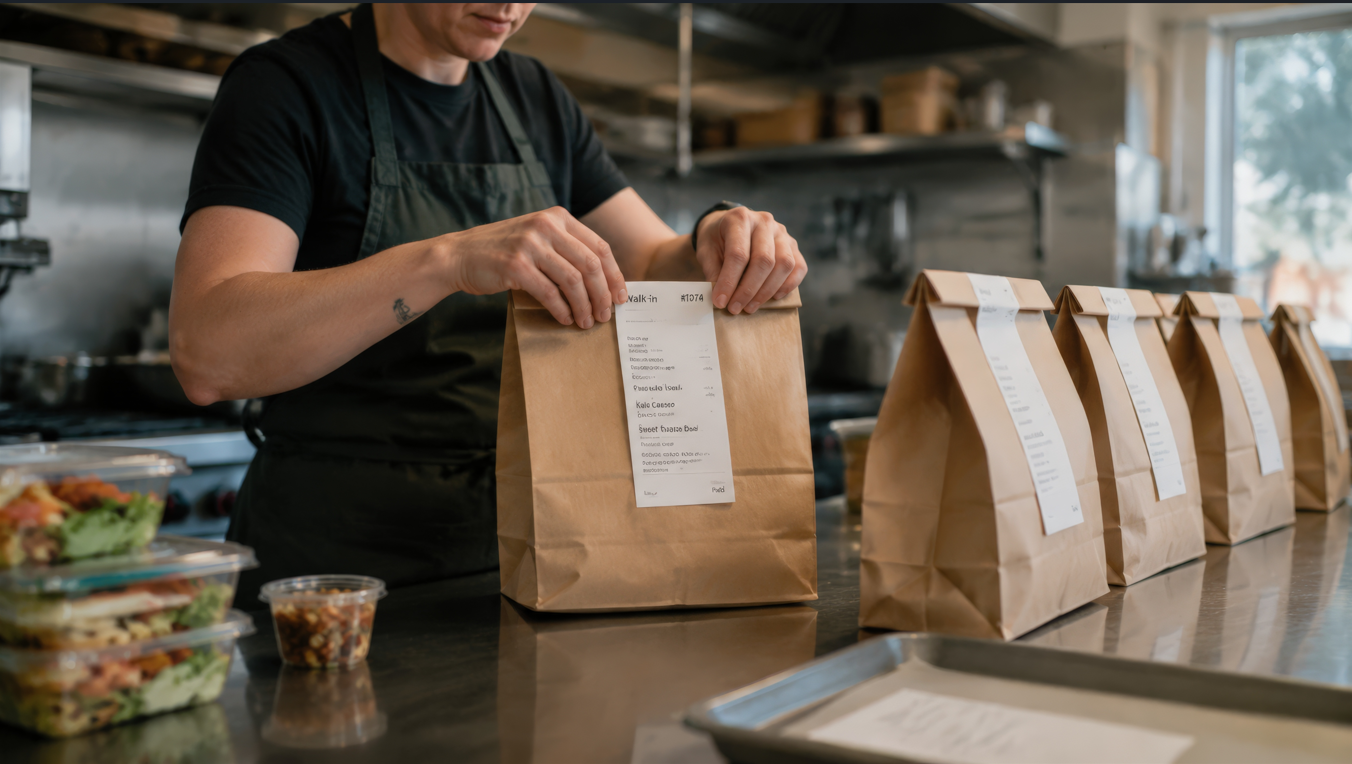
For instance, Krishna Buford, a multi-unit operator and member of Toast’s Customer Advisory Board, leverages her point-of-sale system to automatically print custom QR codes directly onto the receipts of third-party delivery orders. When a customer receives their DoorDash or Uber Eats order, the receipt offers them a direct, scannable path to order from the restaurant's first-party channels next time, effectively converting a high-commission marketplace user into a direct customer.
How restaurants can turn third-party delivery orders into future direct purchases:
- Add QR codes linking directly to your app or online ordering page
- Use stickers, inserts, or receipts to explain the benefits of ordering direct
- Encourage app downloads with limited-time signup incentives
- Personalize inserts based on order type, customer behavior, or daypart when possible
Popular Blogs

Increasing first-party restaurant orders FAQs
Why should restaurants encourage customers to order first-party instead of through third-party ordering platforms?
While third-party ordering platforms can help restaurants reach new customers, they also come with commission fees that reduce profit margins and limit access to valuable customer data.
A first-party ordering system gives restaurant brands full ownership of the customer relationship, making it easier to deliver personalized promotions, build customer loyalty, and create a better customer experience that drives repeat business.
How do commission fees from third-party ordering platforms affect restaurant profit margins?
Third-party ordering platforms typically charge commission fees ranging from 15% to 30% per order, with some premium marketing or delivery services costing even more.
These fees can quickly erode already-thin restaurant profit margins. In addition, restaurants have limited control over the customer experience and service-level agreements (SLAs), including delivery times and issue resolution, making it more difficult to protect their brand reputation when something goes wrong.
By shifting orders to a first-party ordering system, restaurants retain more revenue while maintaining greater control over customer relationships and service quality.
What's the best ordering strategy for increasing first-party restaurant orders?
The most effective ordering strategy is to make ordering direct easier and more rewarding than using third-party ordering platforms.
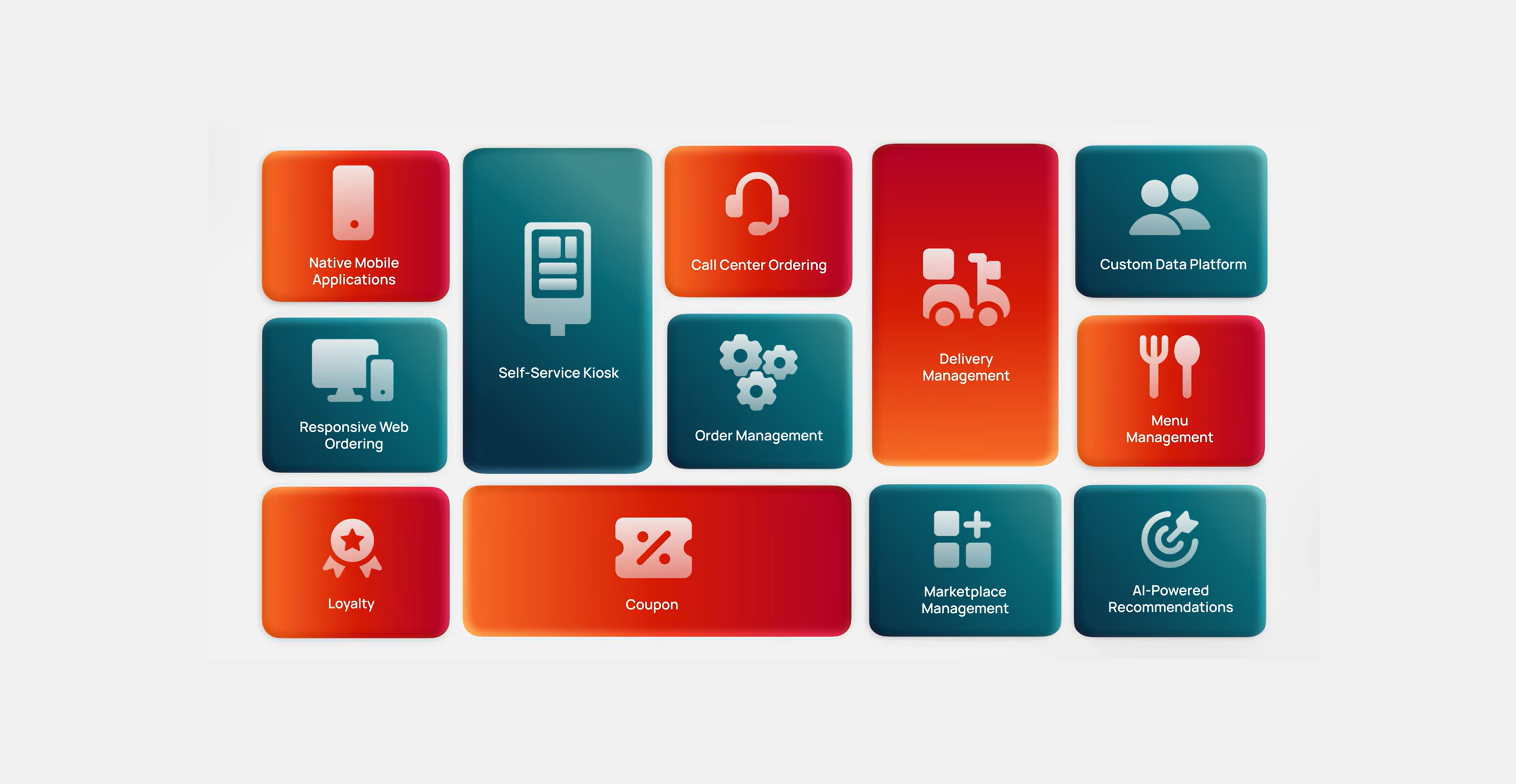
That means offering exclusive loyalty rewards, personalized offers, faster checkout, saved payment information, and seamless experiences across your website, mobile app, kiosk, and other ordering channels.
When customers receive meaningful incentives and consistently have a better experience ordering direct, they're much more likely to return and order first-party again.
How can restaurants improve the customer experience when customers order online?
A great customer experience starts with an ordering system that's fast, intuitive, and consistent across every touchpoint.
When customers order online, they expect features like saved payment methods, one-click reordering, personalized recommendations, and loyalty rewards that make ordering easier, more convenient, and rewarding.
How can restaurants create a better customer experience that keeps guests coming back?
Restaurants build stronger customer loyalty by making every interaction fast, convenient, and personalized.
Mobile apps, kiosks, websites, and other digital ordering channels should work together seamlessly, allowing customers to earn rewards, save favorite orders, receive personalized offers, and enjoy a consistent experience wherever they choose to order.