
|
Published on:
October 16, 2026
|
Published on:
October 16, 2026
6 Key Criteria for Evaluating a Restaurant Platform
Choosing a restaurant platform? Discover six critical factors for connecting ordering channels, modernizing existing systems, and scaling without added complexity.
Not every restaurant commerce platform is built for the same job. Some are designed around a particular POS. Others specialize in one ordering channel or solve a narrow operational problem. Those approaches can work, but the differences become more important as a restaurant adds locations, markets, ordering methods, and technology partners.
Multi-unit brands should be asking, “Can this platform connect the restaurant we operate today with the one we are building for the next five or ten years?”
As you evaluate restaurant commerce platforms, look closely at these six areas.
#1 Can it modernize without forcing you to replace your existing stack?
A commerce platform should give you room to change individual parts of your technology stack without requiring a wholesale replacement.
Look for a composable architecture that can integrate with the POS, payments, loyalty systems, and other technology your brand already uses. That gives you the flexibility to introduce a new ordering experience, recommendation engine, or fulfillment capability without turning every modernization project into a POS migration.
The test is simple: Can you add or replace one capability without rebuilding everything around it?
#2 How many guest channels can it actually run?
Supporting online ordering is different from supporting restaurant commerce.
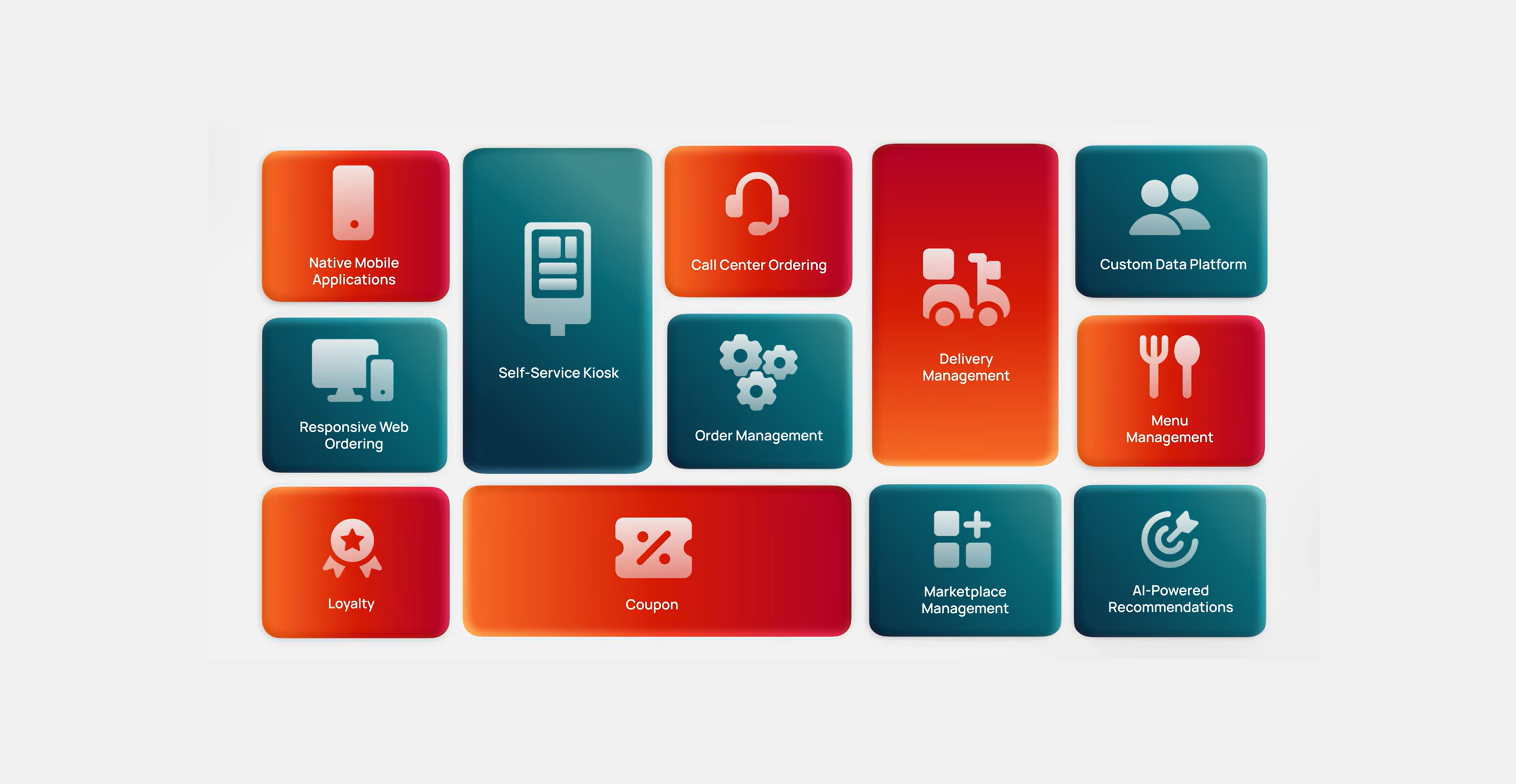
Guests interact with restaurants through websites, mobile apps, kiosks, delivery marketplaces, call centers, messaging channels, loyalty programs, and physical stores. If each of those channels operates on different menu logic, customer data, or integrations, the brand still has a fragmented stack—even if every individual tool works well.
Look for a platform that can support multiple ordering and engagement channels from a common commerce foundation, while still allowing each channel to have an experience designed for how guests actually use it.
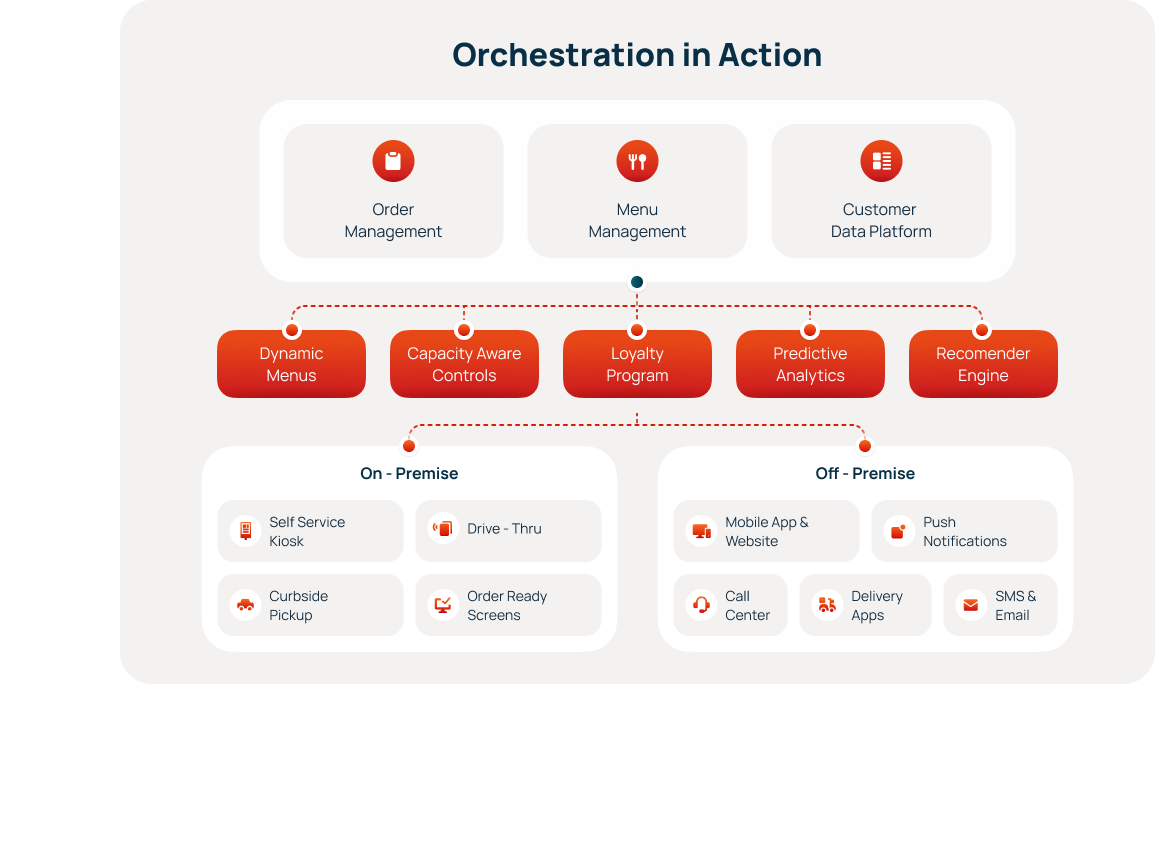
The test: When you add a new channel, are you extending the platform or adding another silo?
#3 Does guest data follow the customer across channels?
A guest does not become a different customer because they moved from your app to a kiosk.
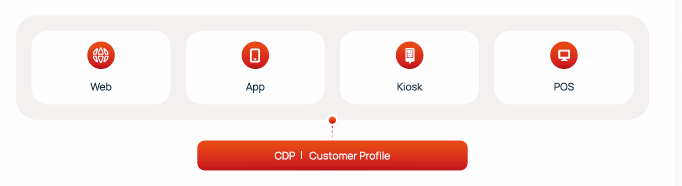
Your commerce platform should be able to connect ordering activity, loyalty participation, preferences, offers, and behavioral data across touchpoints. That shared guest view is what makes capabilities like personalization, recommendations, segmentation, and meaningful loyalty possible.
Without it, each channel learns about the customer independently, and much of that intelligence disappears as soon as the guest orders somewhere else.
The test: Can the platform recognize and learn from the same guest across digital and physical interactions?
#4 Is it built for global and multi-market operations?
Technology that works for a handful of domestic stores may struggle when a brand expands into multiple countries, franchise groups, currencies, languages, or regulatory environments.
Enterprise restaurant platforms need enough flexibility to maintain global standards while accommodating local requirements. That can include language and currency support, regional taxation, market-specific business rules, localized menus, and differences in how stores or franchisees operate.
The test: Can you expand into a new market without creating a separate technology stack for it?
#5 Can it handle enterprise restaurant volume reliably?
Commerce infrastructure becomes most important when the restaurant is busiest.
A system that works well during testing but slows down or becomes unavailable during peak ordering periods can quickly affect revenue, kitchen execution, and guest trust. Enterprise brands should evaluate availability, performance under heavy transaction loads, monitoring capabilities, and how critical restaurant workflows behave when connectivity is disrupted.
Reliability also extends beyond the cloud. Technologies operating inside the restaurant should be designed around the reality that internet connections and external services occasionally fail.
The test: What happens to ordering and fulfillment at 12:30 p.m. on your busiest day if part of the technology stack goes down?
#6 Does it connect digital demand to restaurant operations?
Capturing an order is only half of restaurant commerce. The other half is getting that order prepared and into the guest's hands correctly.
A strong platform should connect ordering channels to menus, POS systems, kitchen workflows, fulfillment tools, promise times, and order-status experiences. That coordination becomes increasingly important as mobile, kiosk, marketplace, delivery, drive-thru, curbside, and dine-in orders all compete for the same kitchen capacity.
The test: Does the platform simply send orders to the restaurant, or does it help the restaurant execute them?
Look beyond the feature checklist
Most enterprise platforms can show an impressive list of features. The bigger differences appear in how those capabilities work together.
A restaurant commerce platform should make it easier to add channels without adding silos, modernize without repeatedly replacing core systems, understand guests across touchpoints, expand into new markets, remain dependable at scale, and turn digital demand into smooth restaurant execution.
Those architectural qualities are harder to see in a product demo—but over time, they often matter more than any individual feature.
Where to start
Brands that unify early build a margin advantage that widens with every location they open, because work that used to take weeks starts taking minutes like a regional menu change, an adjusted off-premise mark, or a new personalized campaign.
The good news is that getting there doesn't mean tearing everything out. Platforms like Tillster's are modular, so your POS and payment systems stay where they are, and you add capability where the pain is worst. Pick the one piece that's costing you the most right now, whether that's kiosks, delivery management, or a recommendation engine, and phase in the rest from there.
Ready to take control of your ordering channels and guest experience?
Talk to our team to see how Tillster can help you unify channels, simplify operations, and scale with more flexibility.